01 / Friuli-Venezia Giulia
Introduction
Friuli-Venezia Giulia sits where Italy meets Austria and Slovenia, and the Alps descend towards the Adriatic Sea.
Friuli-Venezia Giulia may be one of Italy’s smaller and less internationally famous regions, but it is also one of its most varied and fascinating.
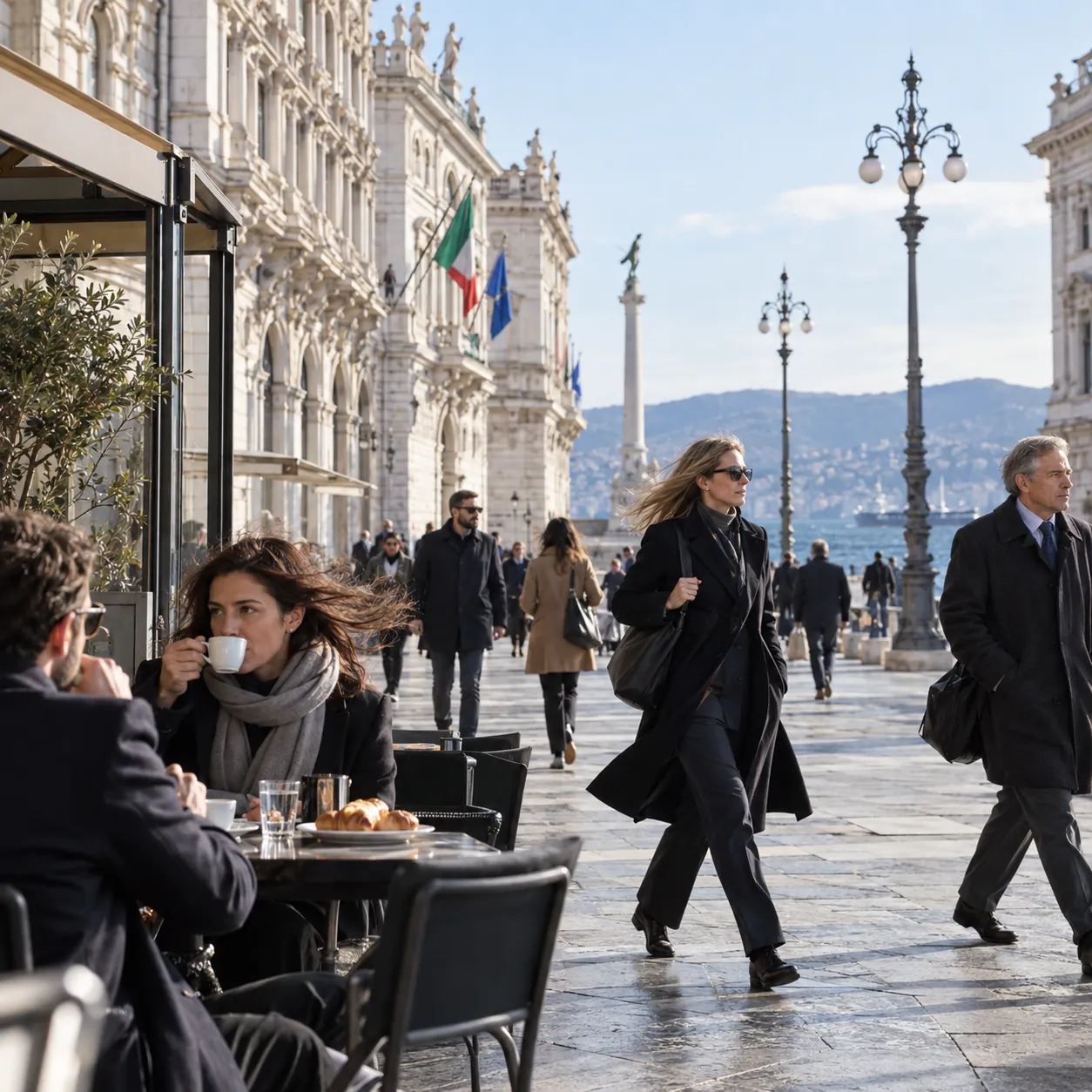
Its capital, Trieste, feels unlike any other Italian city. Once an important port of the Austro-Hungarian Empire, it has grand architecture, historic literary cafés and a distinctive atmosphere shaped by Italian, Austrian and Slovenian influences. It is elegant, cultured and proudly cosmopolitan—with the Adriatic always close by.
Beyond Trieste, the region changes character repeatedly.
Udine offers graceful piazzas and a more distinctly Friulian identity. Gorizia stands directly beside Slovenia, while the extraordinary star-shaped fortified town of Palmanova reveals another chapter of the region’s complex history.
Ancient Aquileia contains some of Italy’s most important Roman remains and early Christian mosaics, while Cividale del Friuli is known for its beautiful historic centre and Lombard heritage.
Those looking for the sea will find the lagoons and sandy beaches of Grado and Lignano Sabbiadoro. Travel north and the landscape becomes completely different, with alpine valleys, lakes, forests and the dramatic Friulian Dolomites.
The region is also renowned for its food and wine. Prosciutto di San Daniele is perhaps its best-known product, but this is also the home of frico, local cheeses, distinctive mountain dishes and celebrated white wines. Its cuisine reflects the same meeting of Latin, Slavic and Central European cultures found throughout the region.
Why might Friuli-Venezia Giulia appeal?
Elegant cities, Roman history and beautiful smaller towns
Adriatic beaches and peaceful lagoons Mountains, lakes, forests and outdoor activities Excellent food, vineyards and internationally respected wines A multicultural border identity and easy access to Austria and Slovenia A strategic position for exploring northeastern Italy and Central Europe A quieter, less internationally saturated alternative to Italy’s most famous regions
Things to consider
- The experience varies enormously between cosmopolitan Trieste, the coast, the plains and the alpine north.
- The Bora wind can be a dramatic feature of life in and around Trieste.
- A car is particularly useful in rural and mountain areas.
- Winters can be cold inland and in the mountains, while the coast has a milder climate.
- International buyers may be less familiar with the region, so careful local research is especially valuable.
Friuli-Venezia Giulia is a region for people who want to discover something beyond the most familiar image of Italy. It is sophisticated without being showy, international while remaining deeply local, and remarkably diverse for its size.
02 / Friuli-Venezia Giulia
Food & lifestyle
Friuli-Venezia Giulia is one of Italy’s most fascinating border regions.
Positioned between Austria, Slovenia and the Adriatic Sea, the region brings together Italian, Friulian, Slavic and Central European influences. Its food tells the story of those cultural connections.
One of its most characteristic dishes is frico, a delicious combination of cheese—and often potatoes—cooked until golden and crisp. The region is also home to Prosciutto di San Daniele and Montasio cheese.
Other traditional dishes include jota, a substantial soup prepared with beans, sauerkraut and potatoes, and cjarsons, filled pasta that can combine sweet and savoury flavours. Gubana, a rolled cake filled with nuts and dried fruit, reflects the Central European side of the region’s culinary identity. Along the Adriatic coast, seafood naturally becomes an important part of the menu.
Friuli Venezia Giulia is also one of Italy’s outstanding wine regions. The hills of Collio and Colli Orientali produce wines including Friulano and Ribolla Gialla.
Daily life changes considerably across the region. Trieste offers grand architecture, historic cafés, a cosmopolitan character and the famous bora wind. Udine feels distinctly Friulian, while Cividale, the vineyard hills, the mountains and the Adriatic coast each provide very different experiences.
It is a compact region, yet it offers extraordinary variety: mountains, vineyards, historic towns, beaches and several cultures within a relatively small area.
03 / Friuli-Venezia Giulia
Places & experiences
Friuli Venezia Giulia sits at Italy’s northeastern edge, where Italian, Austrian and Slavic influences meet. It is a region of border cultures, historic cities, archaeological treasures, mountains, vineyards and Adriatic coastline.
Trieste has an atmosphere unlike that of most Italian cities. Its grand Habsburg-era architecture faces the sea, and Piazza Unità d’Italia opens directly towards the Adriatic. Historic cafés, literary associations and the strong bora wind all contribute to its distinctive identity. It feels both Italian and unmistakably Central European.
Aquileia takes visitors much further back in history. Once an important Roman city, it is now known for its archaeological remains and remarkable basilica. Inside, an extensive ancient mosaic floor survives beneath the church, making it one of the region’s most significant cultural experiences.
Cividale del Friuli is a smaller town with an exceptional setting. Its historic centre overlooks the turquoise Natisone River, crossed by the dramatic Ponte del Diavolo. The town’s streets, museums and Lombard heritage make it an excellent destination for anyone interested in places where landscape and history are closely connected.
On the coast, Grado offers beaches, a historic centre and a tranquil lagoon landscape. Small boats move between shallow waters, reed islands and traditional fishermen’s settlements. Its atmosphere feels very different from both Trieste and the region’s inland towns.
Friuli Venezia Giulia is still unfamiliar to many international visitors, but that is part of its appeal. It offers a complex history and an extraordinary variety of landscapes without relying on a single famous destination.
04 / Friuli-Venezia Giulia
Everyday life
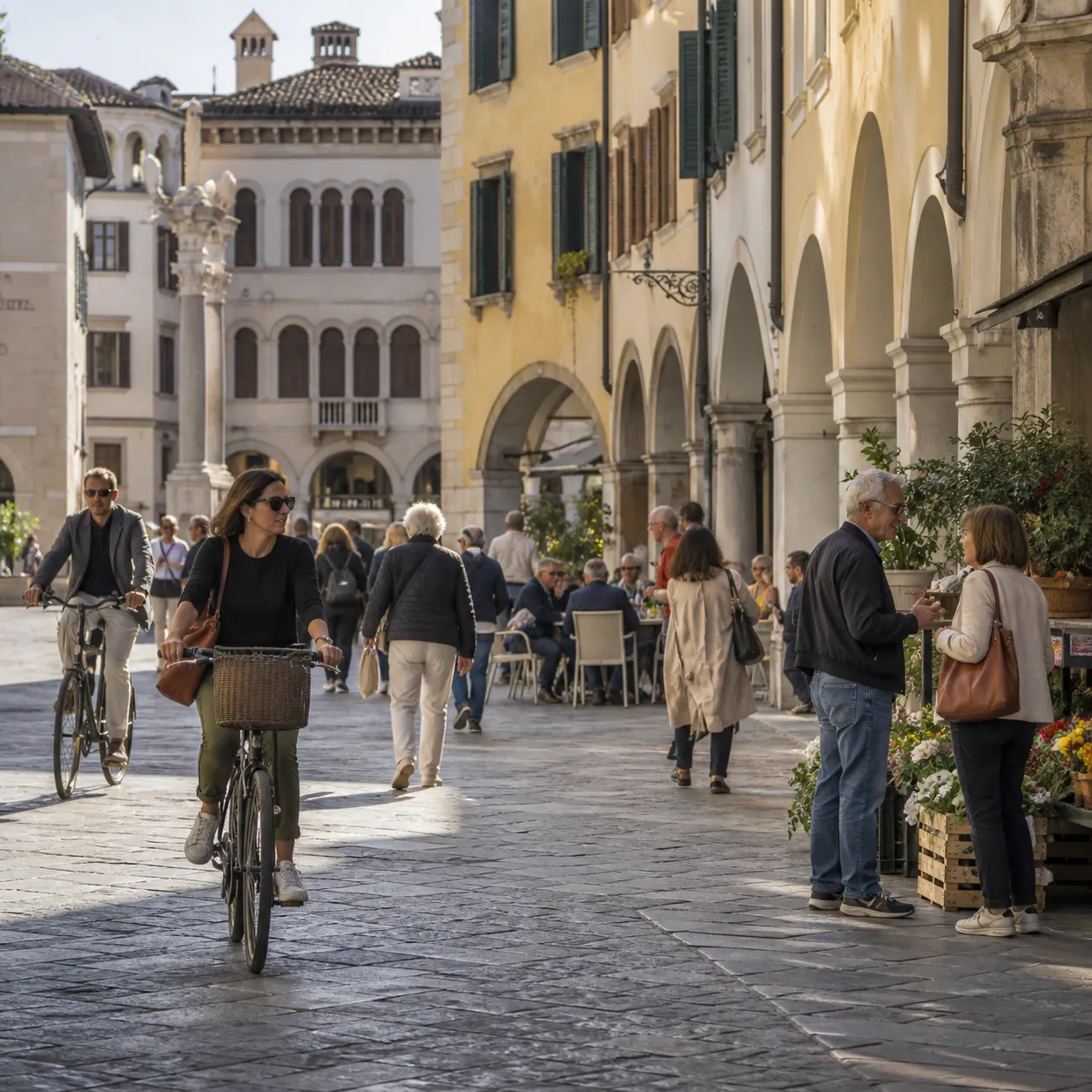
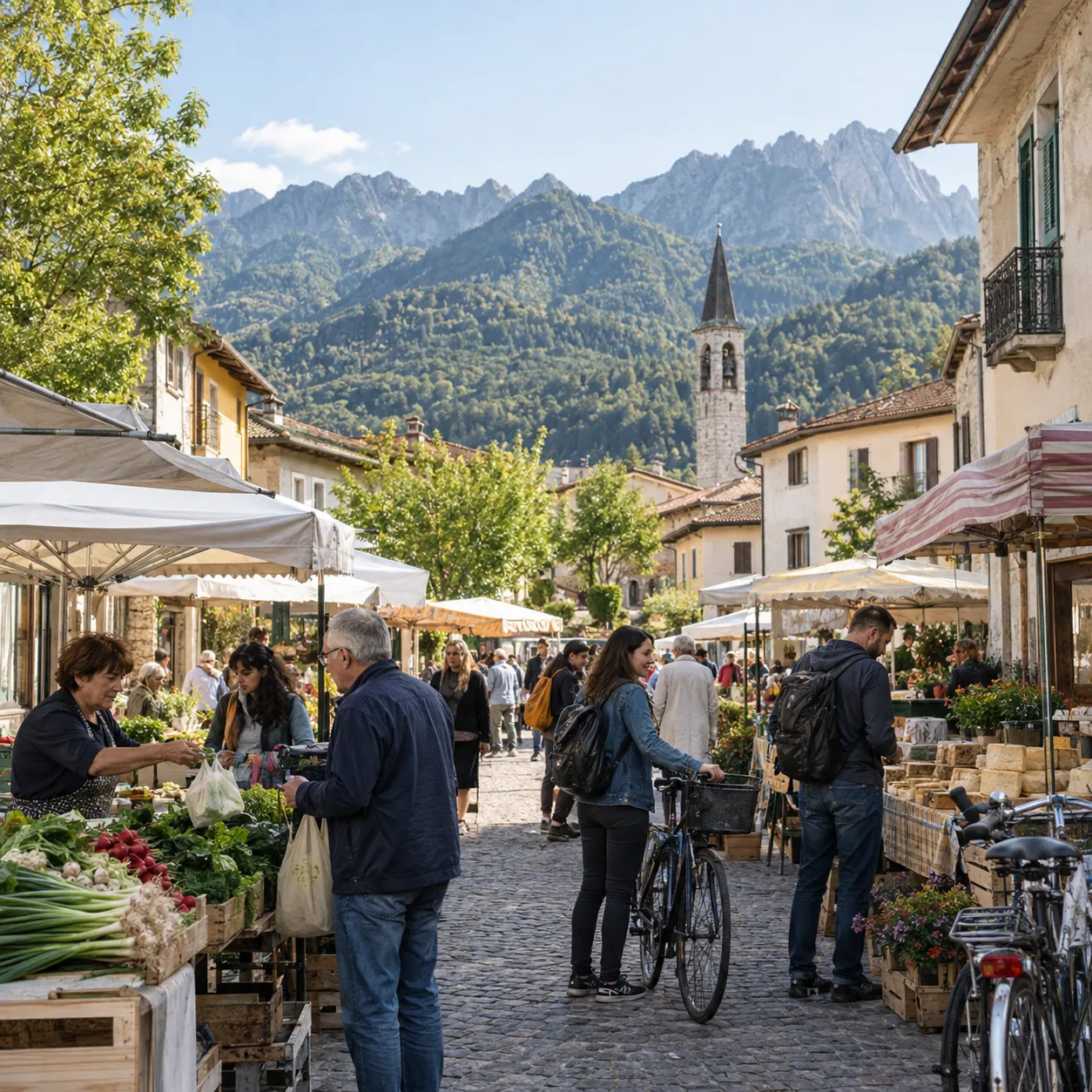
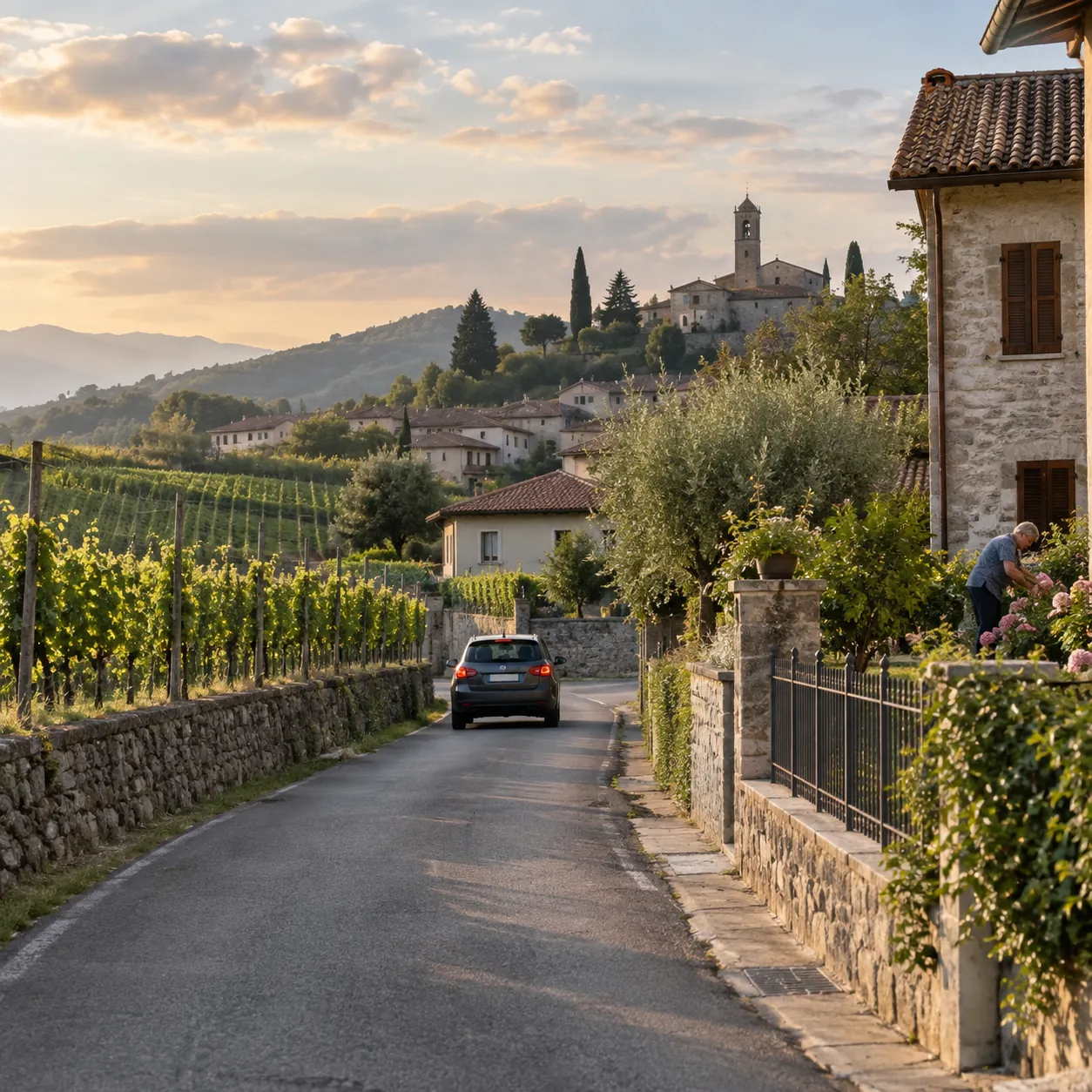
Illustrative scenes of regional life, created with AI.
Friuli-Venezia Giulia is one of Italy’s most distinctive border regions. Italian, Friulian, Slovenian and Central European influences meet here, creating a way of life that can feel quite different from the more familiar image of Italy.
Trieste has the atmosphere of a historic port city, with grand architecture, literary cafés and a strong international identity. It is elegant and culturally interesting, but also hilly and exposed to the bora—a powerful wind that is not an occasional curiosity but a genuine part of everyday life.
Udine feels smaller and more intimate. Its manageable scale, historic centre, bicycles, markets and cafés make daily routines relatively easy. Pordenone, Gorizia and the region’s smaller towns each have their own character, while rural Friuli offers vineyards, agricultural landscapes and close-knit communities.
Living near the borders can make Slovenia and Austria feel like natural extensions of local life. Road and rail connections are useful, but residents of villages and rural districts will often need a car. Services are generally easiest to access in the larger centres, so the distance to healthcare, shops and public transport should be considered carefully before choosing an isolated home.
The climate varies considerably. Coastal areas experience the influence of the Adriatic, the plains can be hot and humid, and the mountains bring snow and colder winters. Grado and Lignano Sabbiadoro are lively during the summer season but can feel very different once the visitors leave.
This is a fascinating region for someone seeking a quieter, less internationally publicised part of Italy. It offers cities, coast, countryside and mountains within relatively short distances—but understanding the exact community is essential.
Local identity is strong, and newcomers who take time to understand its languages, history and traditions will experience far more than someone who sees it merely as an affordable alternative to better-known regions.
Discover independent guidance for buying property in Italy at mgvendone.com
05 / Friuli-Venezia Giulia
Property market
Friuli-Venezia Giulia sits at the meeting point of Italy, Austria, Slovenia and the Adriatic. Its property market reflects that diversity.
Trieste’s architecture, international character and seaside position make it distinctive. Exposure to the Bora wind, steep streets, parking and building condition should all be considered.
Udine and Pordenone offer different, often more accessible year-round markets.
On the coast, Grado attracts holiday demand. Buyers should examine seasonality, condominium expenses, humidity and the rules affecting their intended use.
Rural hills and mountain areas may offer houses at lower prices, but distance from services, seismic considerations, heating, access and renovation costs matter. Properties near international borders may be well connected, but every location needs to be judged on its own merits.
This guide offers general regional context. Local services, conditions and property rules should be checked for your chosen location and plans. Property decisions need individual technical, legal and financial advice.