01 / Basilicata
Introduction
Tucked between Puglia, Calabria and Campania, Basilicata—also known as Lucania—is one of Italy’s smallest and least explored regions. It is a land of remarkable contrasts: ancient stone settlements, dramatic mountains, peaceful countryside and coastlines on both the Ionian and Tyrrhenian seas.
Its best-known treasure is Matera, where the extraordinary Sassi tell thousands of years of human history. But Basilicata has much more to discover: the beautiful coastline of Maratea, the mountain villages of Castelmezzano and Pietrapertosa, the wilderness of the Pollino National Park and many quiet rural communities where traditional Italian life continues at a gentler pace.
Why might someone consider buying here?
- Property can offer better value than in Italy’s more famous regions
- The lifestyle is peaceful, authentic and closely connected to nature
- There are opportunities for village homes, countryside properties and coastal living
- Matera has gained an international profile, while much of the region remains unspoilt
- It may appeal to buyers seeking privacy and a slower pace of life
What should buyers consider?
- Employment and year-round rental demand can be limited outside the main destinations
- Some villages are remote, making a car essential
- Public transport and international connections are less extensive than in larger regions
- Older and rural properties may require renovation and careful technical checks
- Services, internet access and property resale prospects vary considerably by location
Basilicata will not suit everyone—and that is part of its appeal. For the right buyer, it offers space, character and a side of Italy that still feels wonderfully undiscovered.
02 / Basilicata
Food & lifestyle
Basilicata — also known as Lucania — has a cuisine that tells the story of resilience, ingenuity and a very strong relationship with the land.
Its traditional cooking developed from simple ingredients: durum wheat, bread, pulses, seasonal vegetables, pork, lamb and excellent local cheeses. Nothing was wasted, and modest ingredients were transformed into dishes full of character.
The region’s most recognisable ingredient may be the Peperone di Senise IGP. These thin peppers are traditionally tied into long strings, called nzerte, and dried in the sun. When quickly fried they become peperoni cruschi: crisp, delicate and known locally as “red gold.” They are eaten alone or scattered over pasta, vegetables and baccalà.
Handmade pasta includes strascinati, cavatelli and lagane, often served with pulses, breadcrumbs or peppers. Basilicata also gave its name to lucanica, a seasoned pork sausage with very ancient roots. Other treasures include Pane di Matera, beans from Sarconi, caciocavallo podolico and Aglianico del Vulture, the region’s powerful volcanic wine.
Life in Basilicata has a quiet rhythm. Hospitality is sincere, family tables are important and many traditions still follow the agricultural seasons. Religious festivals, processions and village celebrations bring communities together, while food remains one of the principal ways families preserve their identity.
Matera may now be known around the world, but beyond its famous Sassi lies a region of hill towns, rural landscapes and close-knit communities. Basilicata does not reveal everything immediately — and perhaps that is part of its charm.
03 / Basilicata
Places & experiences
Basilicata may be one of Italy’s smaller and less familiar regions, but its experiences are remarkably varied.
Matera is its best-known destination. Walking through the Sassi means entering a landscape shaped by rock, caves, churches and homes layered across a dramatic ravine. It is not simply somewhere to photograph: exploring its lanes, viewpoints and rupestrian churches reveals a long and complex relationship between people and the landscape.
Further inland, the Lucanian Dolomites rise above the villages of Castelmezzano and Pietrapertosa. Visitors can explore the area on foot, admire the villages from panoramic trails or—if they are feeling adventurous—experience the Volo dell’Angelo between the mountains.
Basilicata also reaches the Tyrrhenian Sea at Maratea. Its short but spectacular coastline contains cliffs, coves, beaches and viewpoints, with the statue of Christ the Redeemer standing high above the landscape.
For an entirely different experience, the Pollino National Park offers vast mountain scenery, walking routes and ancient, windswept loricate pines.
Matera’s history, the adventure of the Lucanian Dolomites, Maratea’s coastline and the wilderness of Pollino show how much is contained within this quiet region.
Basilicata may not announce itself as loudly as some of Italy’s more famous destinations. Perhaps that is part of its appeal.
04 / Basilicata
Everyday life
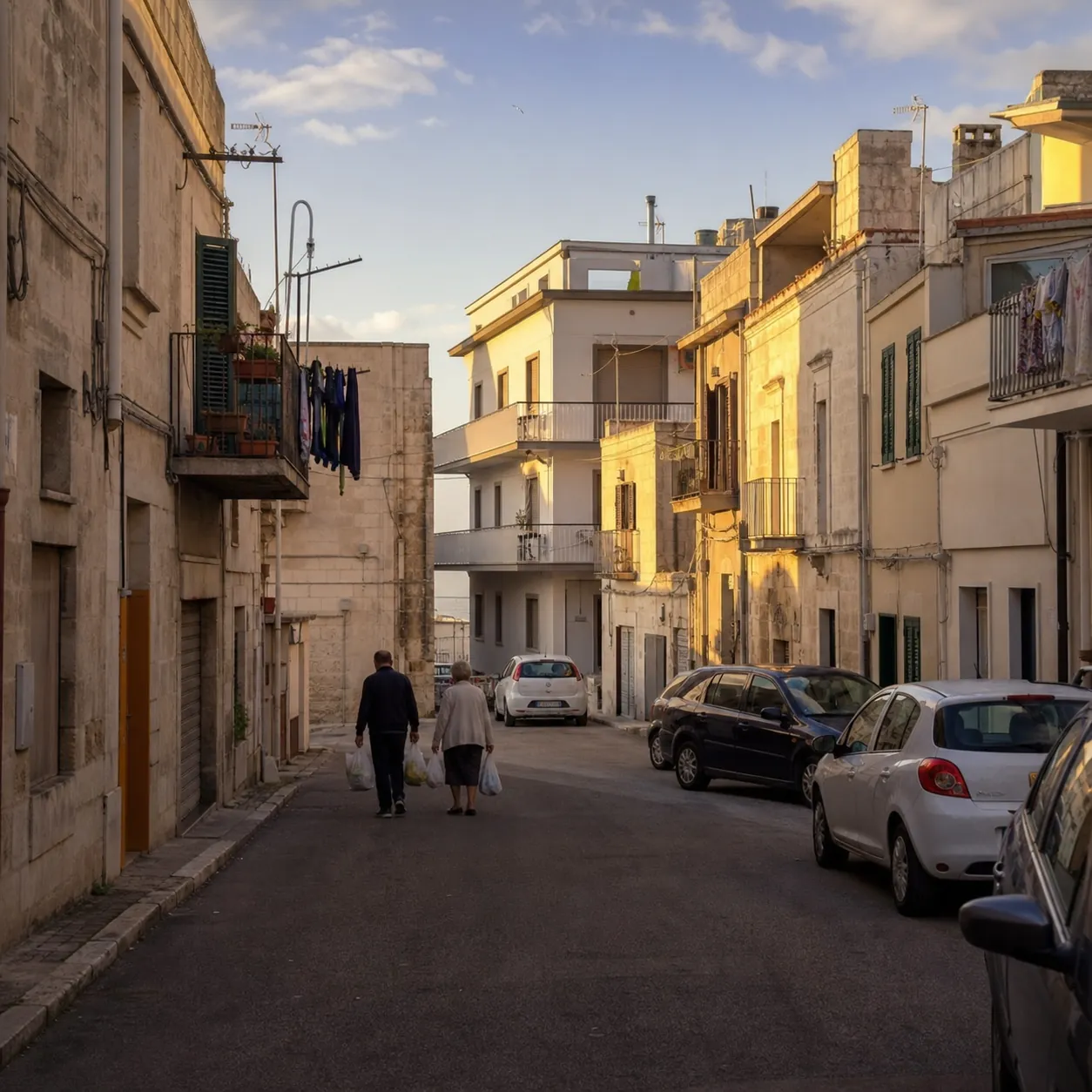
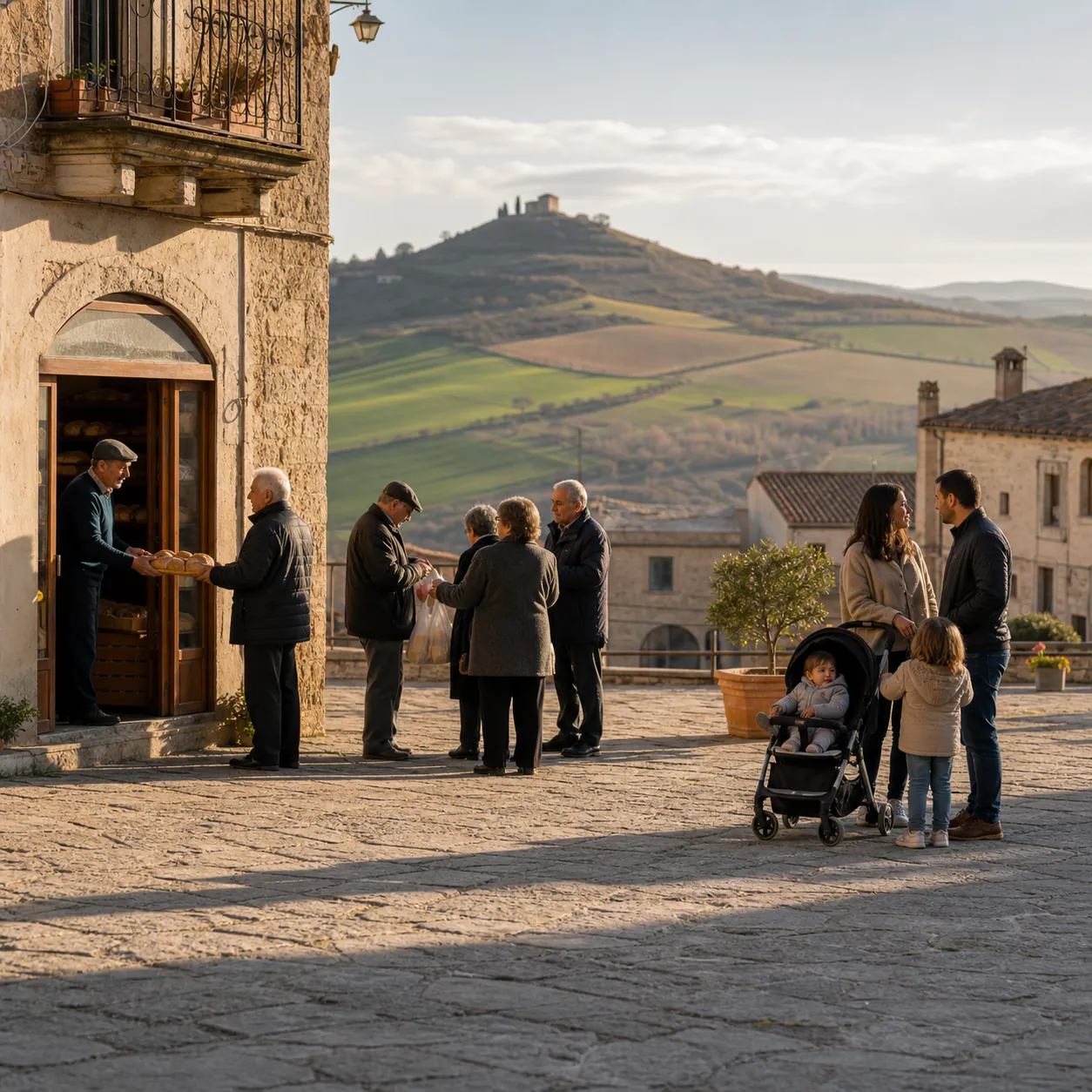
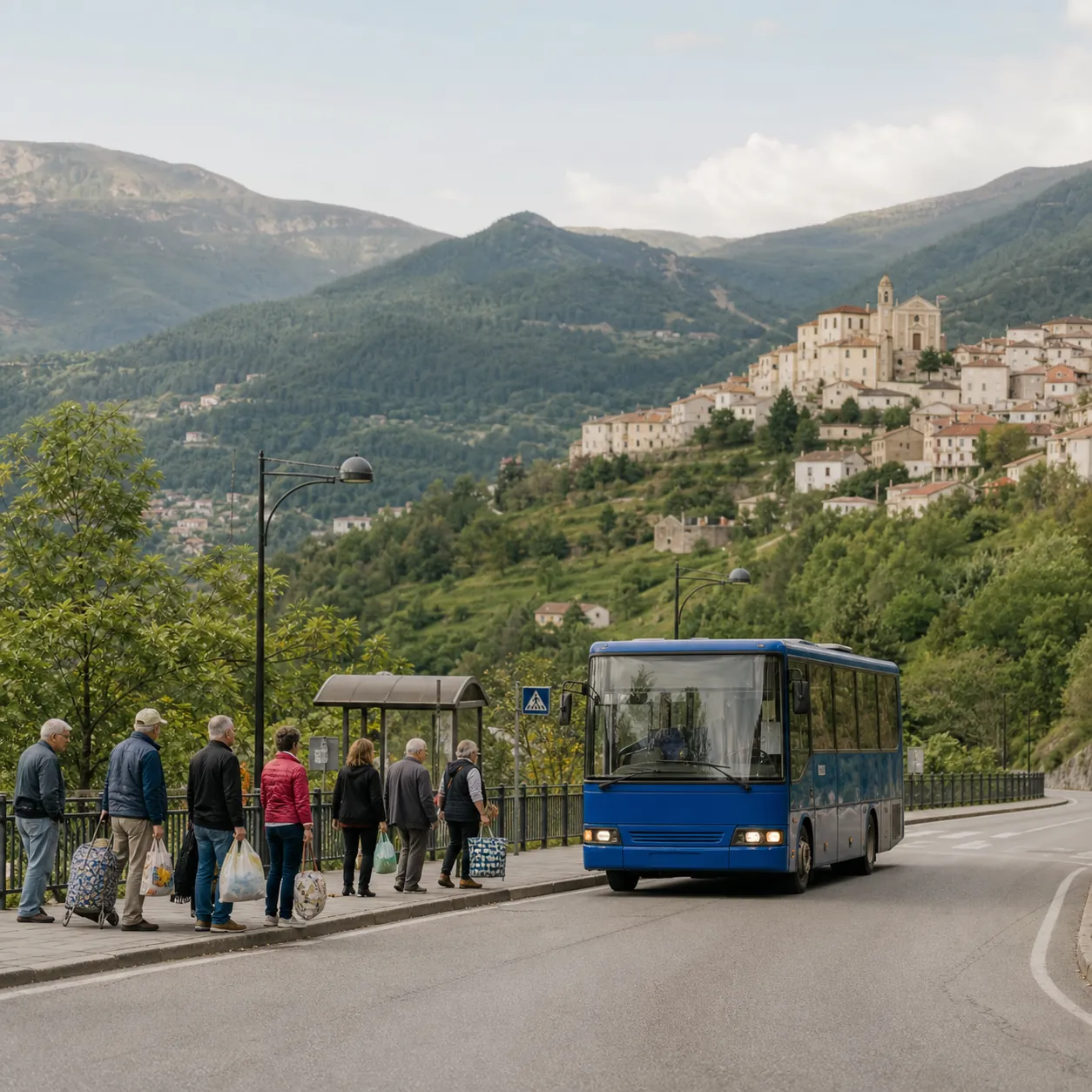
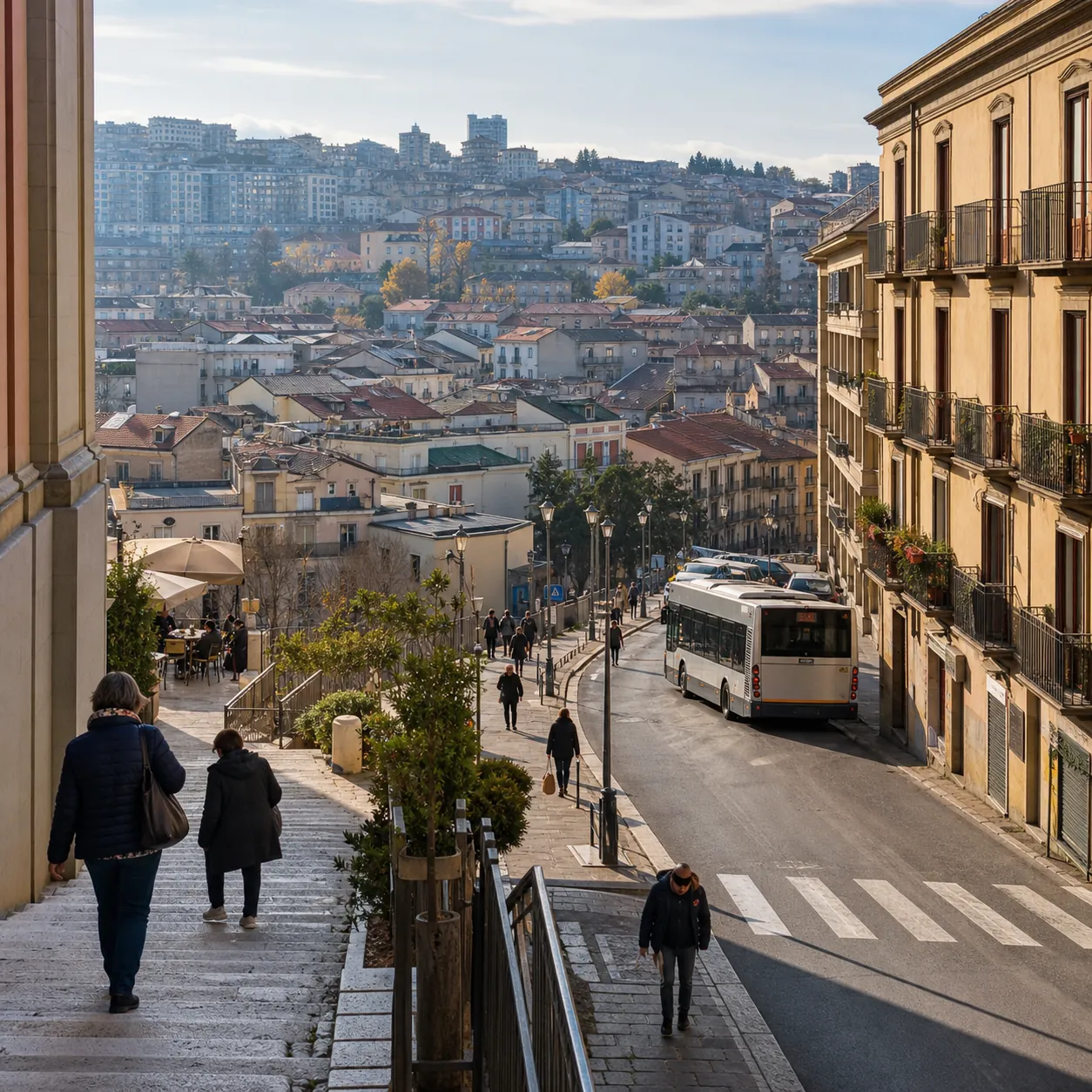
Illustrative scenes of regional life, created with AI.
Basilicata is one of Italy’s least densely populated regions, and that sense of space is an important part of everyday life.
Matera may be internationally famous, but residents experience much more than its historic centre. Modern neighbourhoods, schools, supermarkets, offices and ordinary residential streets form part of the city’s daily routine. Potenza, the regional capital, is a practical working city built across steep hills, where steps, buses and journeys between different levels become part of everyday movement.
Beyond the two principal cities, Basilicata is a region of smaller towns, villages and widely separated communities. Life can be peaceful and personal. The baker, pharmacist and shopkeeper may know their regular customers, and neighbours often provide an informal support network.
This closeness can be rewarding, but it offers less anonymity. New residents may need time, patience and genuine participation to become part of the community. Italian is essential in many smaller places.
Geography plays a major role. Basilicata is mountainous, and a car is often important for work, shopping, appointments and access to services. Public transport exists, but frequency and convenience vary considerably by location. Before choosing a home, it is important to test the journeys you would make regularly—not merely admire the view.
Some villages have experienced population decline, which can mean fewer shops, schools and year-round services. It may also mean tranquillity, affordable local activities and a strong connection to the surrounding landscape. The balance will suit some people far better than others.
Winters can feel very different from the southern Italian image many people expect, especially in higher areas. A beautiful stone property may also require careful consideration of heating, access and maintenance.
Basilicata can offer calm, authenticity and a strong sense of place. But living here successfully requires independence, realistic transport planning and a willingness to adapt to a quieter way of life.
05 / Basilicata
Property market
Basilicata is one of Italy’s smallest and least densely populated regions. Its property market is correspondingly modest—but the differences within the region are substantial.
Matera’s visitor economy, Potenza’s services and the smaller inland communities create very different markets within a small region.
Matera is a very particular market. Its extraordinary architecture and international tourism have created demand that is not reflected across the rest of Basilicata.
Properties within or close to the historic Sassi may be fascinating, but they require careful investigation. Heritage restrictions, permitted use, access, ventilation, damp and previous alterations can all affect what may be done with the property. A beautiful restored space is not automatically suitable as a permanent home or legally usable for holiday accommodation.
Potenza provides a more conventional, year-round market. As the regional capital, it offers employment, healthcare and essential services, although buyers should remember that its elevated position brings a colder mountain climate than many people associate with southern Italy.
Basilicata also has two very different coastal areas: the small Tyrrhenian coastline around Maratea, where scarcity and beauty can support higher prices, and the Ionian side around Metaponto, where some properties are more seasonal.
Inland towns and villages can offer extremely affordable homes. Before being tempted by the price, buyers should consider:
- The availability of shops, healthcare and transport
- The true extent and cost of renovation
- Structural and seismic condition
- Planning and cadastral compliance
- Internet and utility connections
- Local demand for rentals or resale
- Whether the property can be managed from abroad
In a low-value market, extensive renovation may cost more than the finished property could later sell for. That may still be acceptable when the purchase is about lifestyle—but it should be a conscious decision.
Basilicata rewards buyers who understand exactly why they are purchasing and how they intend to use the property.
This guide offers general regional context. Local services, conditions and property rules should be checked for your chosen location and plans. Property decisions need individual technical, legal and financial advice.