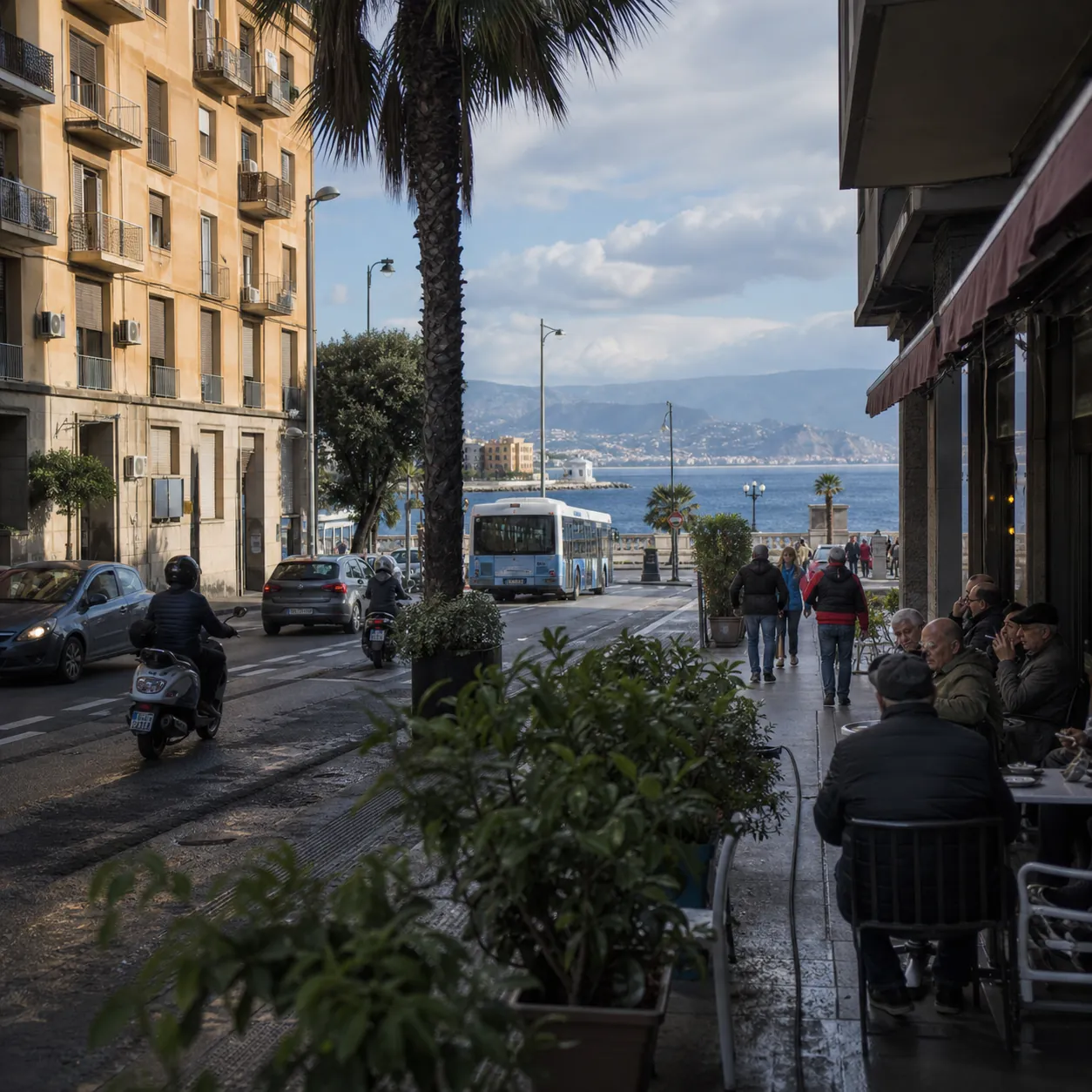
01 / Calabria
Introduction
Forming the toe of Italy’s boot, Calabria lies between the Tyrrhenian and Ionian seas. It is a region of dramatic coastlines, historic fishing villages, forested mountains, ancient towns and deeply rooted traditions.
Many people first discover Calabria through the turquoise waters and cliff-top streets of Tropea. Further south, Chianalea di Scilla appears to rise directly from the sea, with old fishermen’s houses lining the waterfront. Travel inland and the landscape changes completely, from peaceful hill villages to the forests, lakes and mountains of the Sila.
Why might someone consider buying in Calabria?
- Property can offer excellent value compared with many better-known Italian regions
- Buyers can choose between coastal apartments, village houses and countryside properties
- The climate is generally mild, particularly along the coast
- Calabria offers an authentic lifestyle, strong food traditions and beautiful natural surroundings
- Airports at Lamezia Terme and Reggio Calabria provide useful connections
- Popular coastal destinations may offer seasonal rental potential
What should buyers consider?
- Prices and demand can vary considerably between recognised coastal destinations and remote inland villages
- Some locations become much quieter outside the summer season
- A car is often essential, particularly in rural and mountainous areas
- Older properties may require substantial renovation, seismic assessment and careful planning checks
- Healthcare, transport, internet access and everyday services should be investigated before choosing a remote location
- Very inexpensive property does not necessarily represent good value if renovation costs or future resale prospects are poor
Calabria can be a wonderful choice for someone seeking sunshine, character and a more affordable side of southern Italy—but the precise location is particularly important.
02 / Calabria
Food & lifestyle
Calabrian cooking is bold, resourceful and deeply connected to the land. For generations, families preserved what they grew and raised so it could be enjoyed throughout the year. That history still appears in jars of vegetables, cured meats, dried chillies and recipes passed from one kitchen to the next.
The region is famous for ’nduja, the soft and spicy salume associated with Spilinga, and for other traditional cured meats such as soppressata and capocollo. The red onion of Tropea is sweet enough to be eaten raw, while bergamot — cultivated mainly around Reggio Calabria — gives this corner of Italy one of its most distinctive fragrances.
Fresh pasta such as fileja is often served with rich tomato sauces, sometimes with ’nduja. Other local favourites include potatoes from the Sila plateau, caciocavallo cheese, seafood along the two coasts and swordfish around the Strait of Messina. For something sweet, there is the celebrated tartufo di Pizzo, as well as figs, liquorice and traditional biscuits. A glass of Cirò completes the Calabrian table beautifully.
But food here is never only food. It means family, generosity and time spent together. Village festivals celebrate local saints and seasonal produce; recipes change between the Tyrrhenian and Ionian coasts, the mountains of the Sila and the landscapes of Aspromonte.
Everyday life can feel slower and more personal, particularly in the smaller towns: neighbours know one another, the evening passeggiata still matters and long meals remain an important part of family life. Calabria can be lively, rugged, quiet and intensely beautiful — sometimes all in the same day.
03 / Calabria
Places & experiences
Calabria is often introduced through its coastline—and places such as Tropea and Capo Vaticano certainly deserve their reputation. Tropea’s historic centre rises dramatically above the Tyrrhenian Sea, while the Sanctuary of Santa Maria dell’Isola occupies one of the most recognisable positions on the Calabrian coast.
Travel south and you reach Scilla, where the fishing quarter of Chianalea appears to grow directly from the water. Small boats rest beside houses built close to the sea, while the Ruffo Castle overlooks the Strait of Messina. The sunsets along this stretch are one reason it is known as the Costa Viola—the Purple Coast.
But Calabria is not only a seaside destination.
In the Sila National Park, forests, lakes and mountain landscapes offer opportunities for walking, cycling and horse riding, with a completely different atmosphere from the coast. In winter, parts of the area become destinations for snow and winter sports.
Further south, Aspromonte offers rugged valleys, waterfalls, mountain villages and walking routes from which, on clear days, the sea may still feel surprisingly close.
This is what makes Calabria so interesting: within the same region you can experience turquoise water, traditional fishing communities, forested plateaus and wild mountain scenery.
For somebody considering spending time—or eventually owning a property—here, choosing between the coast and the interior could mean choosing two very different ways of life.
04 / Calabria
Everyday life
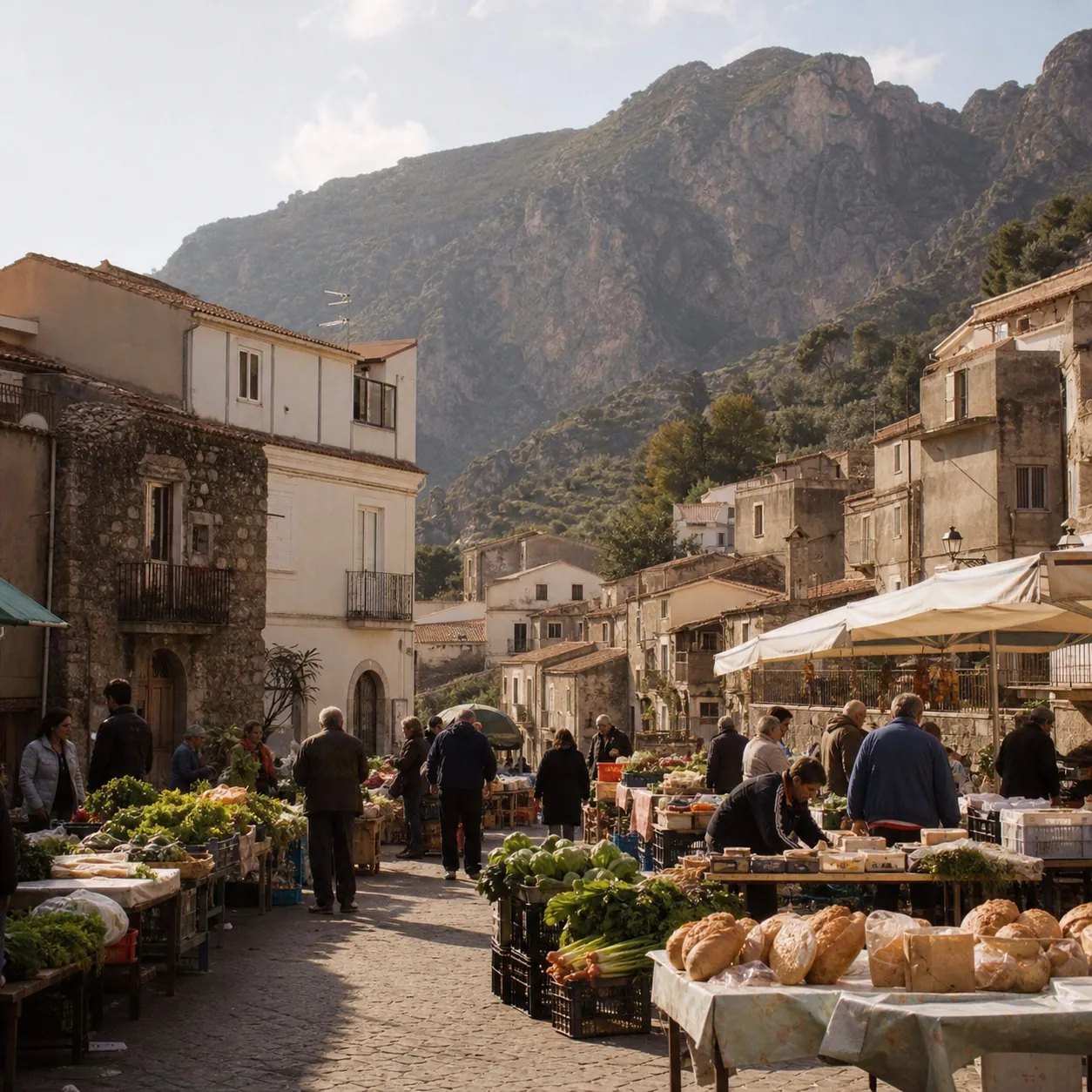
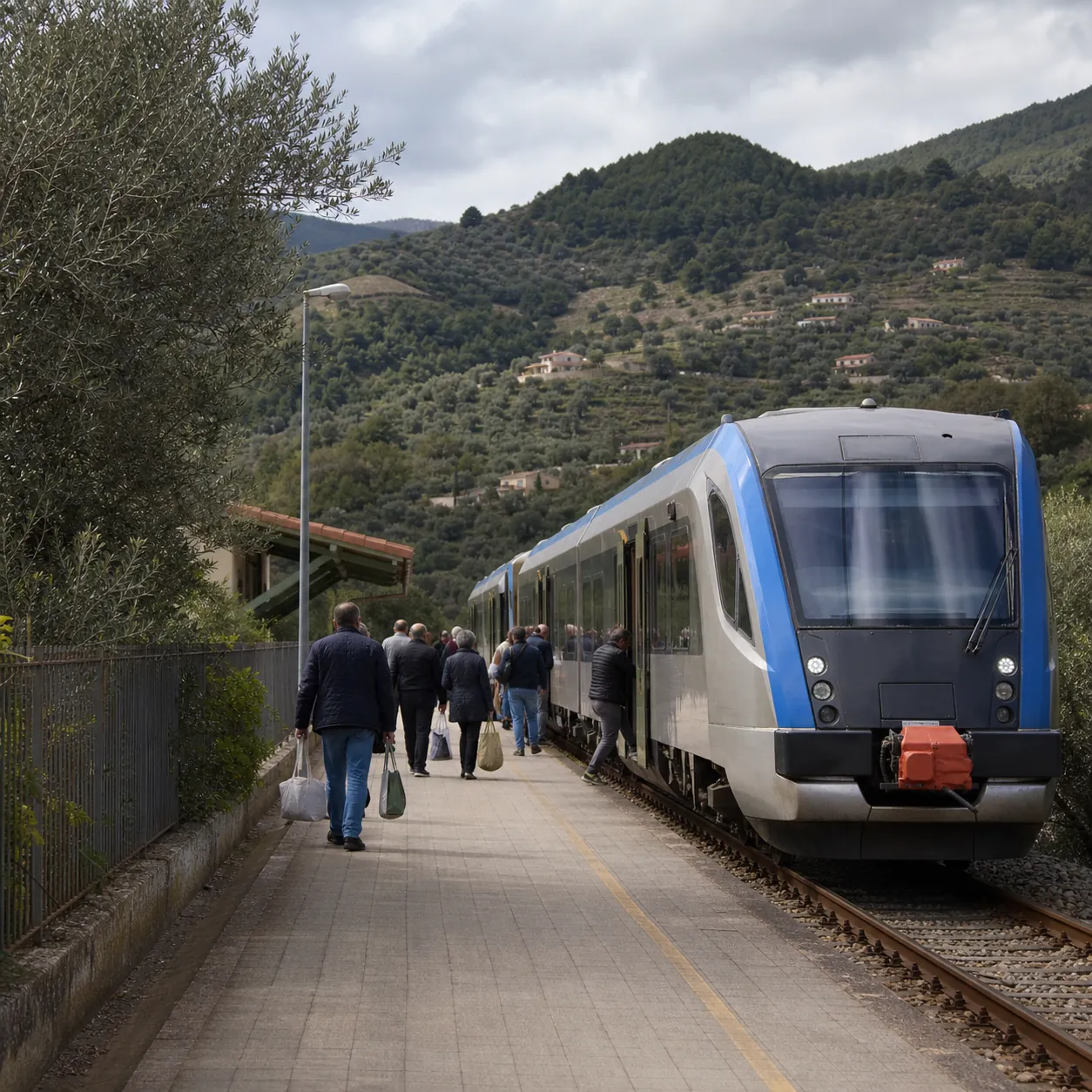
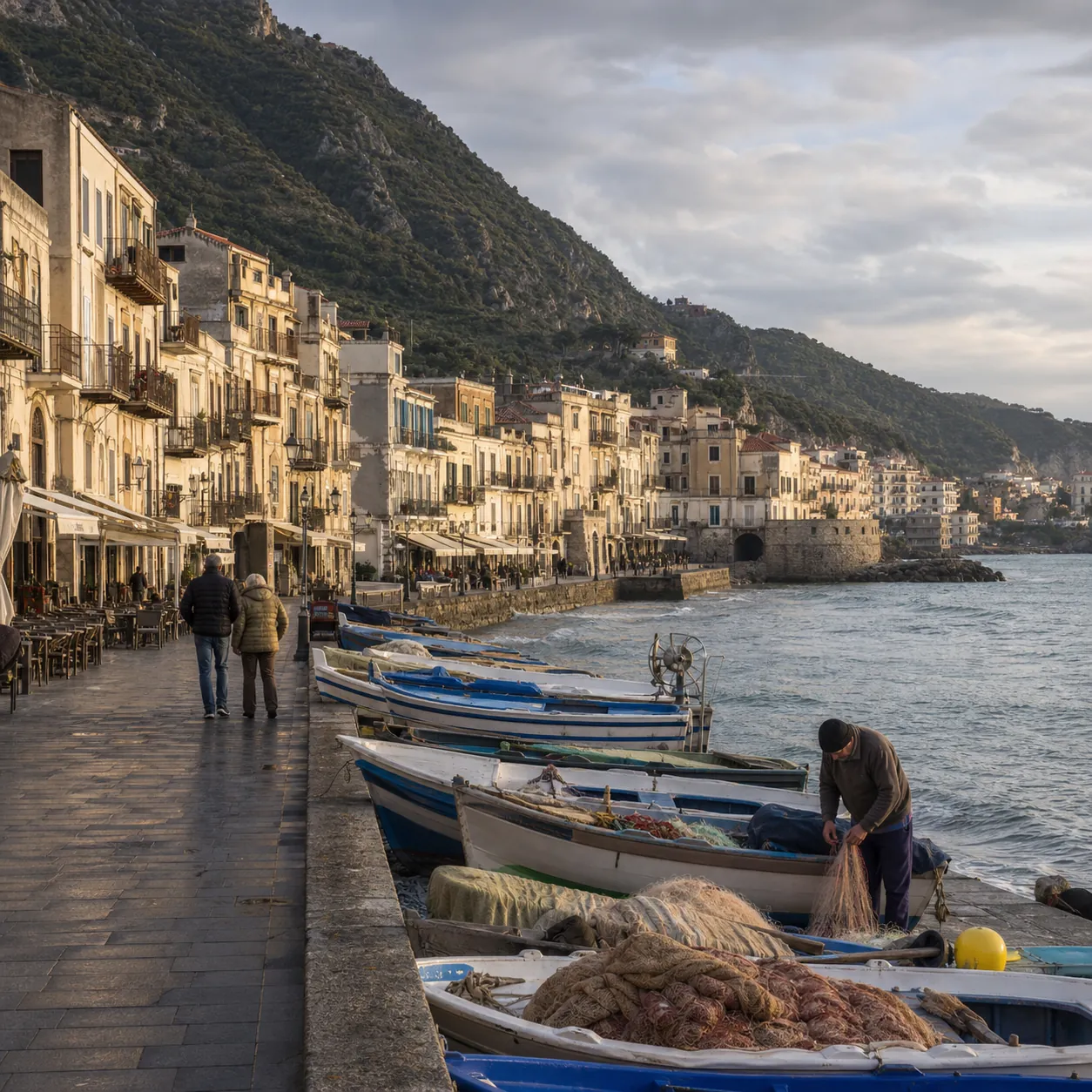
Illustrative scenes of regional life, created with AI.
Calabria is often introduced through its coast, mountain villages and traditional food. Everyday life, however, varies enormously depending on where you choose to live.
Reggio Calabria and the other principal towns provide shops, schools, hospitals, professional services and a more active year-round routine. In smaller inland communities, life is quieter and much more personal. The local bar, market and neighbourhood shops are not simply places to buy something—they are part of the community.
Relationships matter. People tend to know their neighbours, and practical help is often found through personal recommendations. For newcomers, becoming part of that network may take time. Speaking Italian makes an enormous difference, particularly outside the larger towns.
Transport must be considered carefully. Rail services connect parts of the coast, but many inland areas and smaller communities are easier to manage with a car. Mountain roads and the shape of the region mean that a journey which looks short on a map may take longer than expected.
There is also a strong seasonal contrast. Coastal towns can become lively and crowded in summer, then considerably quieter during winter. Some businesses reduce their hours or close outside the main season. Anyone considering year-round life should visit in winter as well as summer.
Daily life may involve shopping at a weekly market, stopping at the bar for coffee, dealing with errands in the nearest larger town and taking an evening passeggiata. The pace can feel gentler, but practical matters and bureaucracy sometimes require patience.
Calabria may appeal to people who value community, natural surroundings and a less hurried life. It may be less suitable for someone who expects frequent public transport, extensive services within walking distance or the anonymity of a large international city.
The question is not only whether Calabria is beautiful—it is whether its everyday rhythm matches the life you want.
05 / Calabria
Property market
Calabria offers some of the lowest advertised property prices in Italy, but affordability alone does not make every property a good purchase.
Prices and demand vary significantly within Calabria.
The Tyrrhenian coast includes internationally recognised locations such as Tropea, Capo Vaticano and Scilla. Attractive sea views and established holiday demand can command a premium, particularly for properties that are easy to reach and close to beaches and services.
The Ionian coast may offer greater value, but conditions differ considerably between individual towns. Some places have active communities throughout the year, while others become extremely quiet outside the summer season.
Cities including Reggio Calabria, Cosenza and Catanzaro offer a different type of market: apartments and family homes supported by employment, universities, healthcare and everyday services. These may be more suitable for permanent living than an isolated coastal property.
Inland villages can appear remarkably inexpensive. However, buyers should consider
- Whether essential services remain available throughout the year
- Accessibility and the condition of local roads
- The likely cost of renovation
- Structural and seismic considerations
- Damp, ventilation and roof condition
- Planning and cadastral compliance
- Resale demand if circumstances change
For rural properties, legal access, boundaries, water supply, drainage and the condition of the land must also be established before committing.
A low purchase price can be attractive, but it must be considered alongside renovation costs, maintenance and the practical realities of living there. Equally, a beautiful sea view does not automatically guarantee strong rental returns: seasonality can be pronounced, and occupancy projections should be realistic.
Calabria can offer extraordinary value and a wonderful quality of life—but the right choice depends on what you want the property to do for you.
This guide offers general regional context. Local services, conditions and property rules should be checked for your chosen location and plans. Property decisions need individual technical, legal and financial advice.