01 / Lombardia
Introduction
Lombardia is often associated with Milan — Italy’s dynamic capital of fashion, design, finance and innovation — but the region offers far more than city life.
It is home to some of Italy’s most celebrated northern lakes. Lake Como is known for its elegant villas, mountain scenery and beautiful waterside towns. Lake Garda’s western shore combines historic villages, clear water and a more open Mediterranean atmosphere, while Lake Iseo offers a quieter and less internationally known alternative.
Beyond the lakes, Lombardia includes the historic cities of Bergamo, Brescia, Mantua, Cremona and Pavia, as well as Alpine valleys, vineyards and peaceful countryside.
This variety makes Lombardia fascinating for anyone imagining a life in Italy: you can choose the international energy of Milan, the refinement of Lake Como, the relaxed rhythm of Lake Garda, or the history and character of a smaller city such as Bergamo.
02 / Lombardia
Food & lifestyle
Lombardia is often associated with Milan—Italy’s centre of fashion, finance and design—but the region contains far more than one city.
Its landscape includes the great northern lakes, Alpine valleys, fertile plains, vineyards and historic cities such as Bergamo, Brescia, Mantua, Cremona and Pavia. Its food changes just as dramatically from one area to another.
Risotto alla Milanese is one of the region’s best-known dishes. Saffron gives it its golden colour, and it is traditionally served alone or with ossobuco—slow-cooked veal shank finished with gremolata.
Cotoletta alla Milanese is another classic: a breaded veal cutlet cooked until golden. In colder months, cassoeula combines pork and cabbage in a dish rooted in rural Lombard tradition.
Further north, the cuisine becomes more Alpine. Pizzoccheri from Valtellina combines buckwheat pasta with potatoes, cabbage, butter and local cheese. Polenta accompanies meats, stews and cheeses across many parts of the region.
Lombardia produces an exceptional range of cheeses, including Gorgonzola, Taleggio, Bitto and Grana Padano. Bresaola comes from Valtellina, while Franciacorta is renowned for its traditional-method sparkling wine.
Even panettone began in Milan before becoming an essential Christmas tradition throughout Italy and far beyond.
The lifestyle is full of contrasts. Milan offers business, culture, nightlife, international connections and an efficient transport network. The lakes provide elegant towns, gardens, water and mountain scenery. The countryside and smaller historic cities offer a slower rhythm, while the Alps bring skiing and outdoor life.
This variety is also important when considering a property. Living in central Milan, beside Lake Como, in a Bergamo neighbourhood or in a Valtellina village would create four completely different experiences.
03 / Lombardia
Places & experiences
Lombardia is often associated with Milan and its beautiful lakes, but the region offers an extraordinary variety of experiences—from energetic cities and Alpine scenery to fortified hill towns and quiet Renaissance centres.
Milan is Italy’s financial and design capital, but it is also a city rich in history and culture. The Duomo, the Galleria Vittorio Emanuele II, museums, theatres and distinctive neighbourhoods provide experiences well beyond shopping and business. It is modern and fast-moving by Italian standards, yet historic buildings and traditions remain part of everyday life.
Lake Como offers an entirely different atmosphere. Villages such as Varenna and Bellagio sit between the water and steep mountains, connected by ferries that make exploring the lake part of the experience. Historic villas, gardens, waterfront walks and changing views across the water explain its international appeal.
Bergamo Alta rises above the modern lower city behind its Venetian walls. Reached by road, steps or funicular, the upper town offers cobbled streets, historic churches, attractive squares and wide views across the surrounding landscape. It feels separate from the busy city below.
Further south, Mantova is surrounded on three sides by lakes. Its palaces, Renaissance squares and waterside setting give the city a quieter and more reflective character. It is an ideal destination for anyone interested in architecture, history and Italian cities that are sometimes overlooked by international visitors.
Lombardia demonstrates how misleading it can be to judge an entire region through its best-known destination. Life in central Milan, beside Lake Como, within Bergamo’s historic centre or in Mantova would offer four very different experiences.
04 / Lombardia
Everyday life
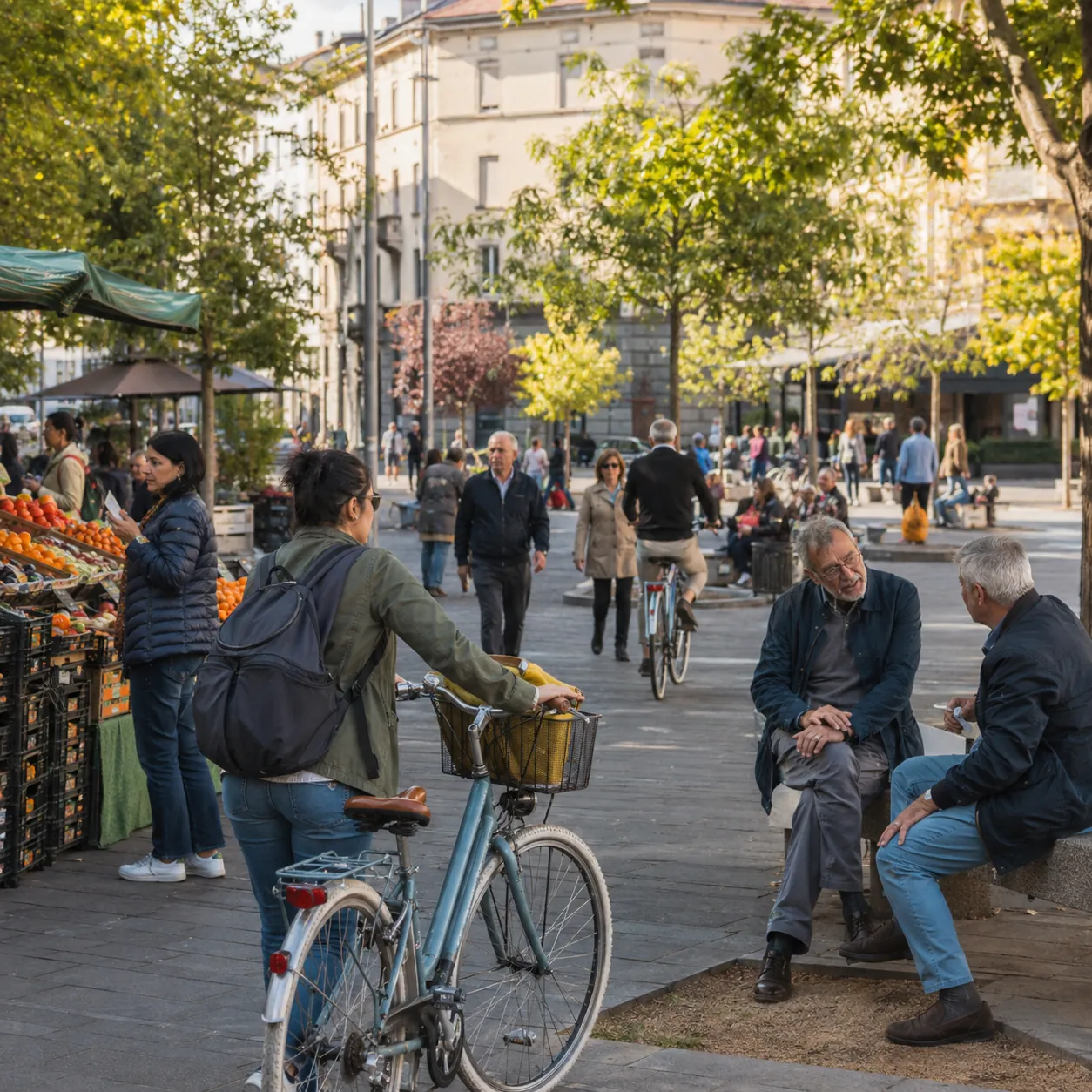
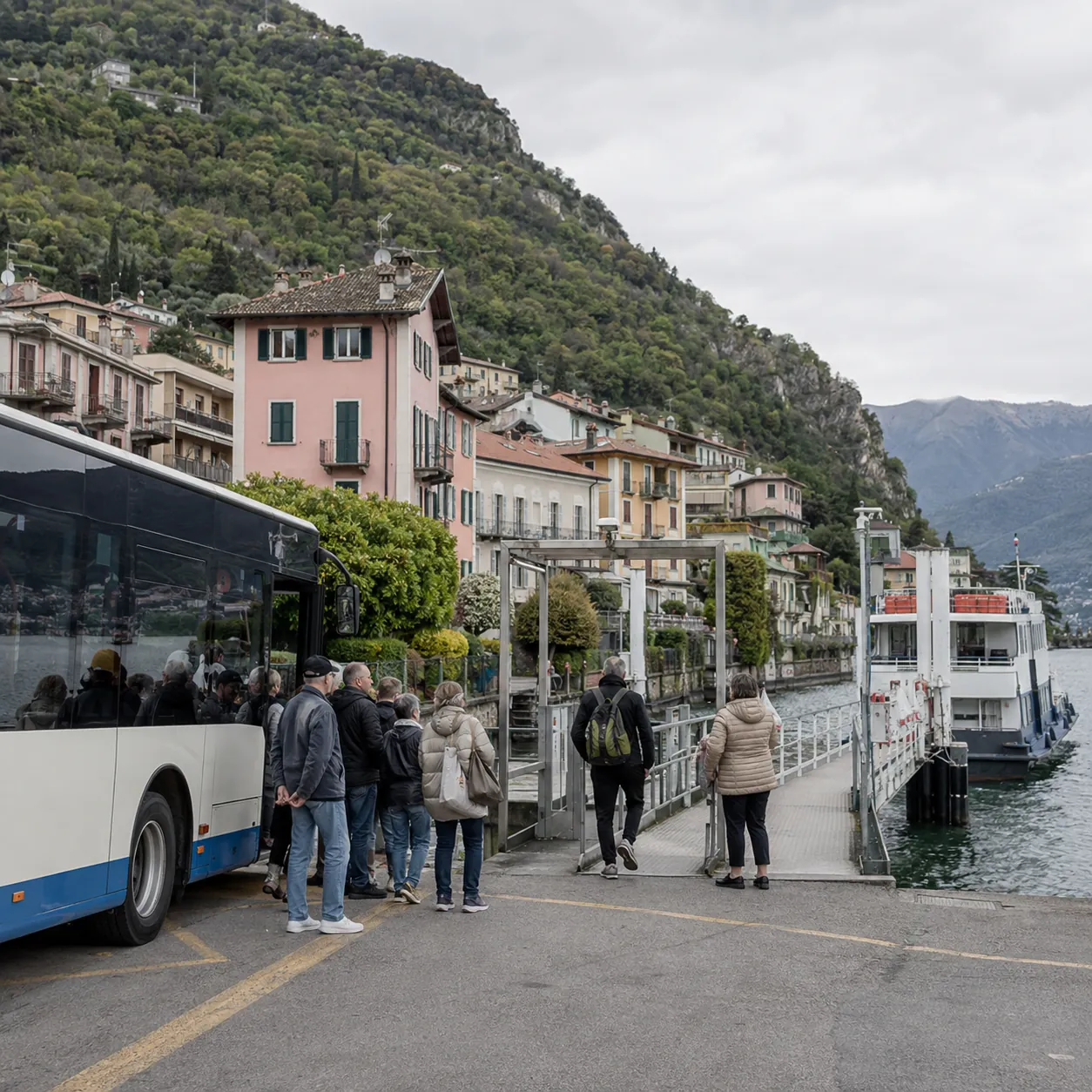
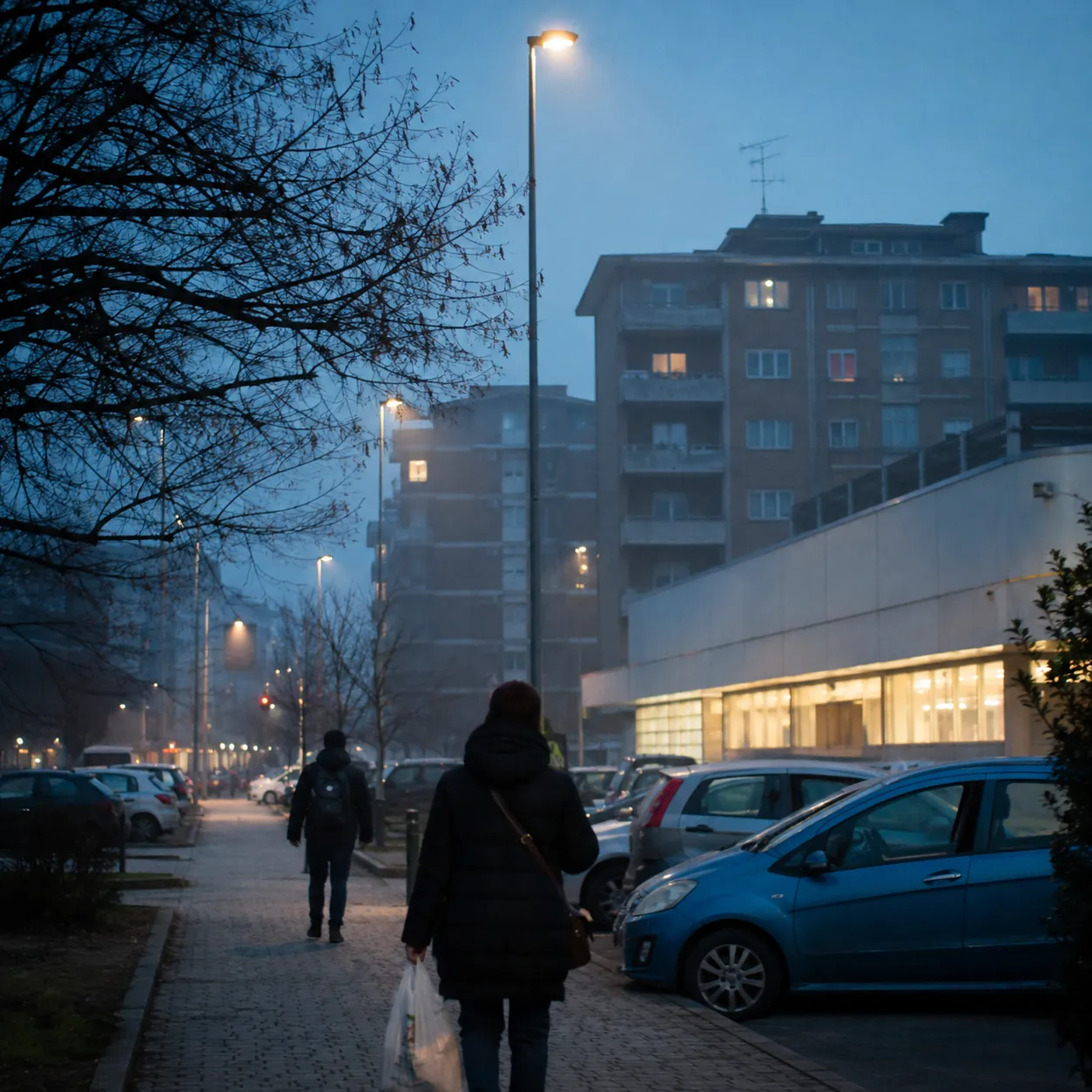
Illustrative scenes of regional life, created with AI.
Lombardia is Italy’s most populous region and one of its principal economic centres. It offers employment, transport, healthcare and services on a scale that few other Italian regions can match—but everyday life varies enormously according to location.
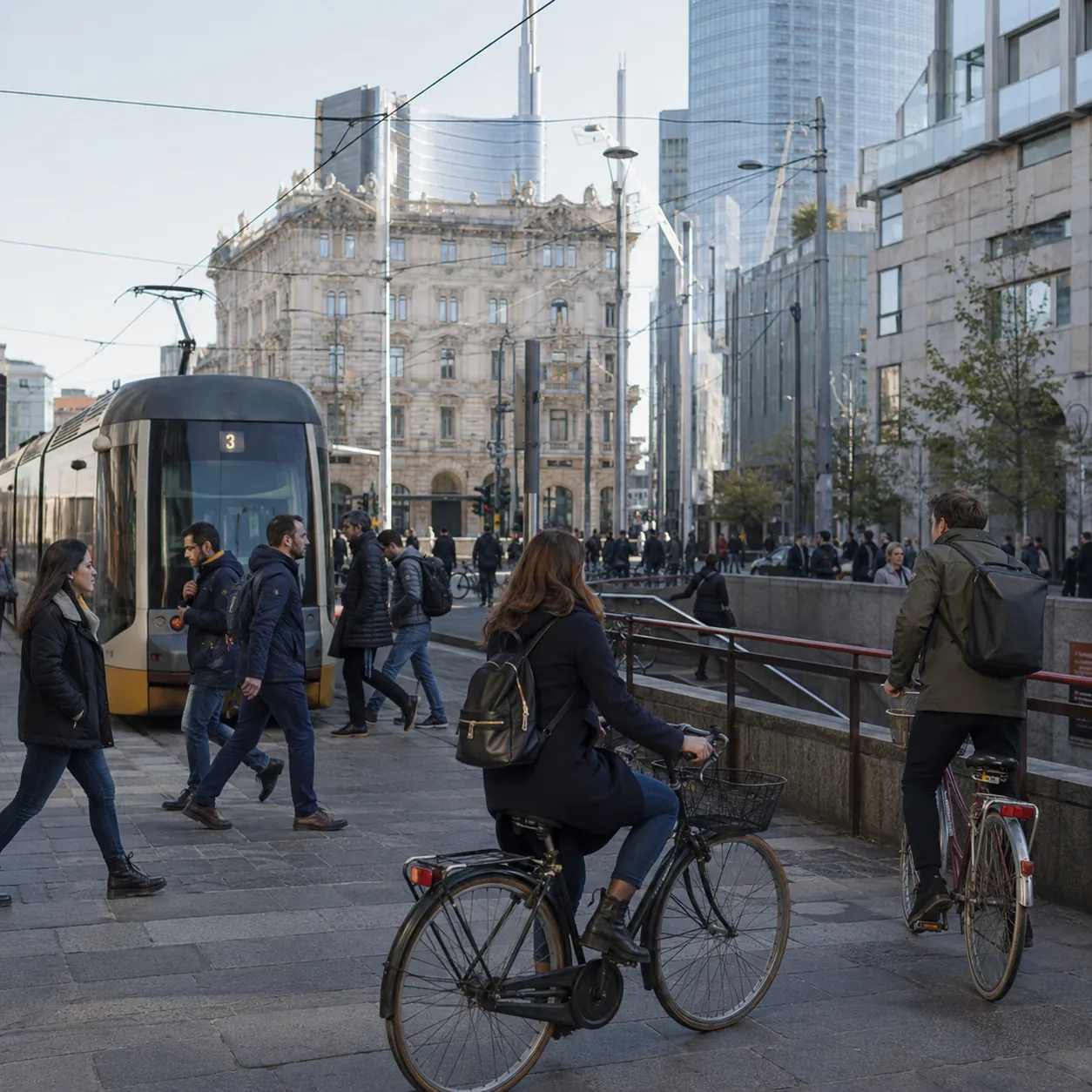
Milan is fast, international and career-focused. It has extensive public transport, major universities, specialist hospitals, cultural institutions and direct connections throughout Italy and Europe. It can be exciting and convenient, but housing costs, traffic and the pace of life are considerably higher than in most of the country.
Living outside central Milan does not necessarily mean leaving its economic orbit. Towns across the metropolitan area and provinces such as Monza and Brianza, Varese, Como, Bergamo, Brescia, Pavia and Cremona are linked by rail and road networks. However, commuting time should be tested in reality rather than estimated from distance alone.
Cities such as Bergamo, Brescia and Mantova provide strong services and cultural life on a more manageable scale. Smaller towns can offer established communities, local markets and a quieter routine, although the quality of public transport varies considerably.
The lakes create another lifestyle entirely. Como, Garda, Maggiore and Iseo offer beautiful surroundings and access to nature, but the most famous locations can be expensive, crowded in summer and affected by restricted parking and narrow roads. Ferry services are useful in certain areas, but should not automatically be treated as a substitute for a car or reliable year-round connections.
Mountain communities offer space, scenery and outdoor life, yet access to employment, healthcare and services may require longer journeys. As elsewhere, a property that is delightful during a holiday can feel isolated during winter or prolonged bad weather.
Lombardia generally provides excellent healthcare and a wide choice of schools and services, particularly around its cities. This is an important consideration for families, professionals and older buyers. The region also offers Italy’s broadest employment market, although opportunities remain concentrated in particular areas.
The climate may surprise international buyers. Summers on the plains can be hot and humid, while winters are cold, frequently grey and sometimes foggy. Air quality can be a concern in the Po Valley. Lake and mountain microclimates vary, so regional averages tell only part of the story.
Daily life often feels more structured and faster than in southern Italy. Work and commuting influence the weekly rhythm, while neighbourhood cafés, markets, family lunches, aperitivo and weekends at the lakes or mountains provide balance.
Lombardia may be ideal for someone who wants Italian life alongside international connections and dependable infrastructure. But it is not one single lifestyle: central Milan, a commuter town, a provincial city, a lakeside village and an Alpine community require completely different budgets and expectations.
Where would suit you: Milan’s energy, a practical smaller city, the lakes or the mountains?
05 / Lombardia
Property market
Lombardia contains Italy’s financial capital, internationally desirable lakes, productive provincial cities and rural or mountain communities. Looking only at its regional average can therefore be misleading.
Milan’s historic centre and other sought-after districts can sit far above the regional average. Neighbourhood, transport, building quality, floor, lift and energy efficiency can create enormous differences.
The lakes form another premium market. A famous waterfront location and an ordinary inland town may be geographically close but financially worlds apart. Views, direct access, parking and ferry or rail connections can strongly affect desirability.
Bergamo, Brescia and other working cities offer established year-round markets, while smaller towns may provide more space for the budget. However, a lower purchase price must be balanced against commuting, local services and future resale demand.
For apartments, examine condominium accounts, planned works and heating arrangements. For lake and mountain properties, consider access, humidity, terrain and maintenance. Local flood and geological risks must also be assessed for the individual property.
This guide offers general regional context. Local services, conditions and property rules should be checked for your chosen location and plans. Property decisions need individual technical, legal and financial advice.