01 / Puglia
Introduction
Stretching along the heel of Italy’s boot, Puglia is a region of whitewashed towns, ancient olive groves, beautiful coastlines and some of the country’s most distinctive architecture.
From the conical trulli of Alberobello and the white hilltop city of Ostuni to the dramatic cliffs of Polignano a Mare and the elegant baroque streets of Lecce, Puglia has developed an enormous international appeal—while still retaining many strong local traditions.
Its property market is just as varied. Buyers may encounter historic townhouses, coastal apartments, trulli, country homes and traditional masserie surrounded by olive trees.
Why might someone consider buying in Puglia?
- A warm climate and coastlines on both the Adriatic and Ionian seas
- A wonderful combination of beaches, countryside and historic towns
- International airports at Bari and Brindisi
- Strong tourism in established locations, potentially supporting holiday rentals
- Distinctive properties including trulli and masserie
- A lively food culture and a relaxed outdoor lifestyle
What should buyers consider?
- Prices have risen considerably in internationally popular areas
- Tourism and rental demand can be highly seasonal
- Rural properties require careful checks concerning planning permission, land boundaries, water, drainage and access
- Trulli and masserie may have protected architectural features that affect renovation
- Unauthorised extensions or alterations must be identified before purchase
- Coastal and rural locations can feel very different outside the summer season
- Renovation costs should be assessed professionally before making an offer
Puglia can offer an enchanting lifestyle, but it is no longer one single “inexpensive market.” A fashionable coastal property, a restored masseria and a village home further inland can have completely different prices, practical considerations and resale prospects.
02 / Puglia
Food & lifestyle
Puglia’s table reflects its landscape: ancient olive groves, wheat fields, vegetable gardens, fishing ports and a coastline that seems to continue forever.
Its cooking is often described as cucina povera, but there is nothing poor about its flavour. The secret is respect for excellent ingredients — extra-virgin olive oil, ripe vegetables, pulses, durum wheat and fresh seafood — prepared simply and generously.
Orecchiette are the region’s best-known pasta, traditionally shaped by hand and often served with cime di rapa. In Bari Vecchia, the sight of women making them outside their homes has become part of the city’s identity.
Then there is focaccia barese, warm and soft with tomatoes and olives; crusty Pane di Altamura; creamy burrata from Andria; fave e cicoria; panzerotti; the Bari speciality tiella of rice, potatoes and mussels; and the bombette of the Valle d’Itria. Along the coast, raw seafood and Taranto mussels express another side of Puglian life.
Local wines such as Primitivo and Negroamaro carry the warmth of the southern landscape, while the lighter wines of areas such as Locorotondo suit summer evenings perfectly.
Life in Puglia often happens outdoors. Families gather for long lunches, children play in the piazza and the evening passeggiata brings towns back to life after the heat of the day. Yet Puglia is wonderfully varied: Bari is different from the white villages of the Valle d’Itria; the Gargano feels different from Salento; working farms and masserie sit only a short drive from lively seaside towns.
Food here is not a performance. It is hospitality, memory and everyday pleasure — best enjoyed slowly and in company.
03 / Puglia
Places & experiences
Puglia stretches through the heel of Italy, offering historic towns, distinctive architecture and coastlines on both the Adriatic and Ionian seas.
In Alberobello, streets of whitewashed trulli create one of Italy’s most recognisable landscapes. Exploring the town also provides an introduction to the wider Valle d’Itria, where trulli, olive groves and white towns such as Locorotondo, Cisternino and Ostuni shape the countryside.
Further south, Lecce offers a completely different experience. Its historic centre is an open-air display of intricate Baroque architecture carved from warm local stone. Piazza Duomo, the Basilica di Santa Croce and the surrounding lanes are especially atmospheric in the softer evening light.
On the Adriatic coast, Polignano a Mare stands above limestone cliffs and sea caves. You can explore its historic centre on foot, look down towards Lama Monachile or experience the coastline from the water.
In northern Puglia, the Gargano presents another side of the region entirely. Its forested promontory, white cliffs, caves and clear sea can be explored on foot, by bicycle or from a boat or kayak. The nearby Umbra Forest adds a surprisingly green and peaceful interior to the coastal experience.
Puglia cannot be understood through one destination alone. The trulli of the Valle d’Itria, the Baroque streets of Lecce, Polignano’s cliffs and the wilder Gargano each offer a different version of the region.
04 / Puglia
Everyday life
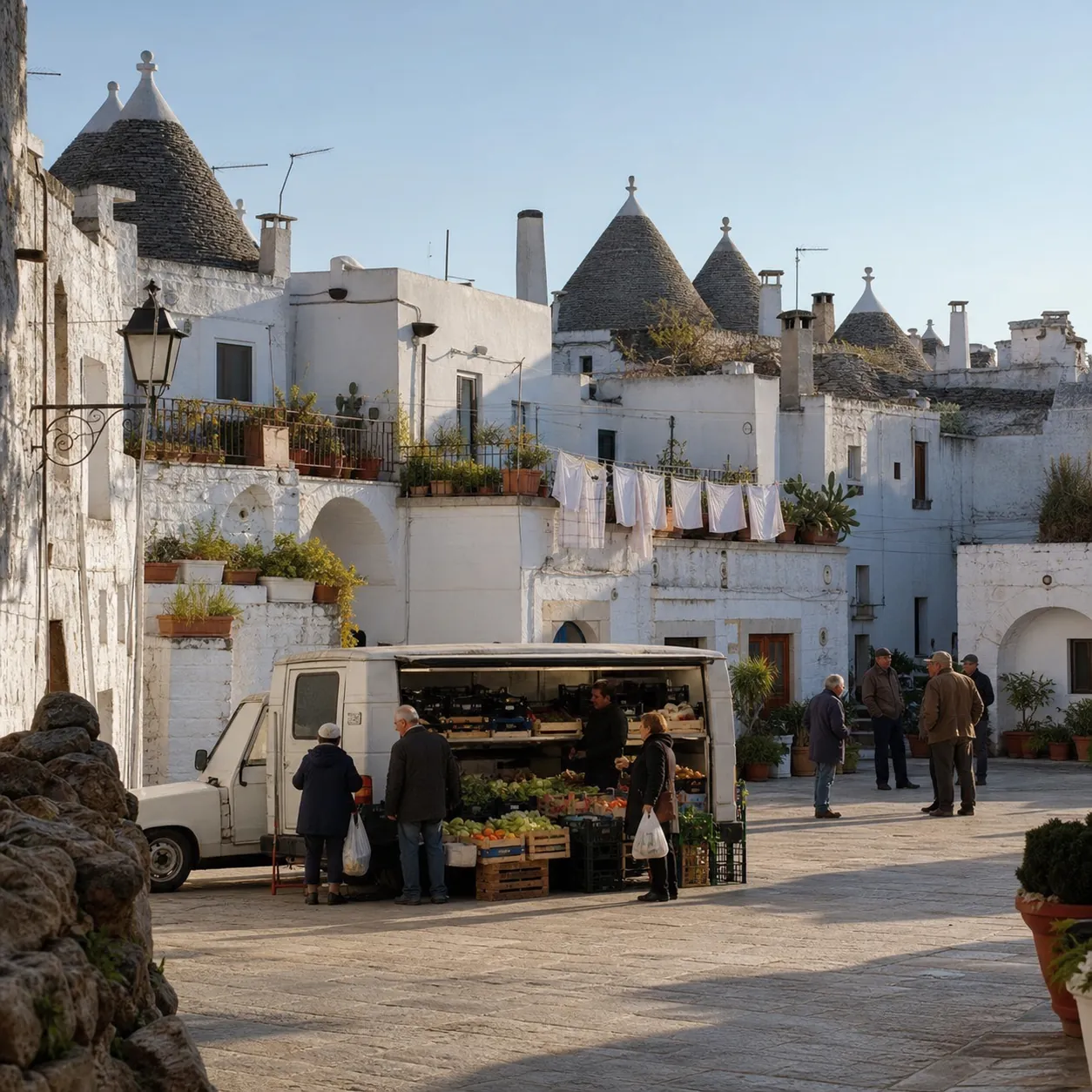
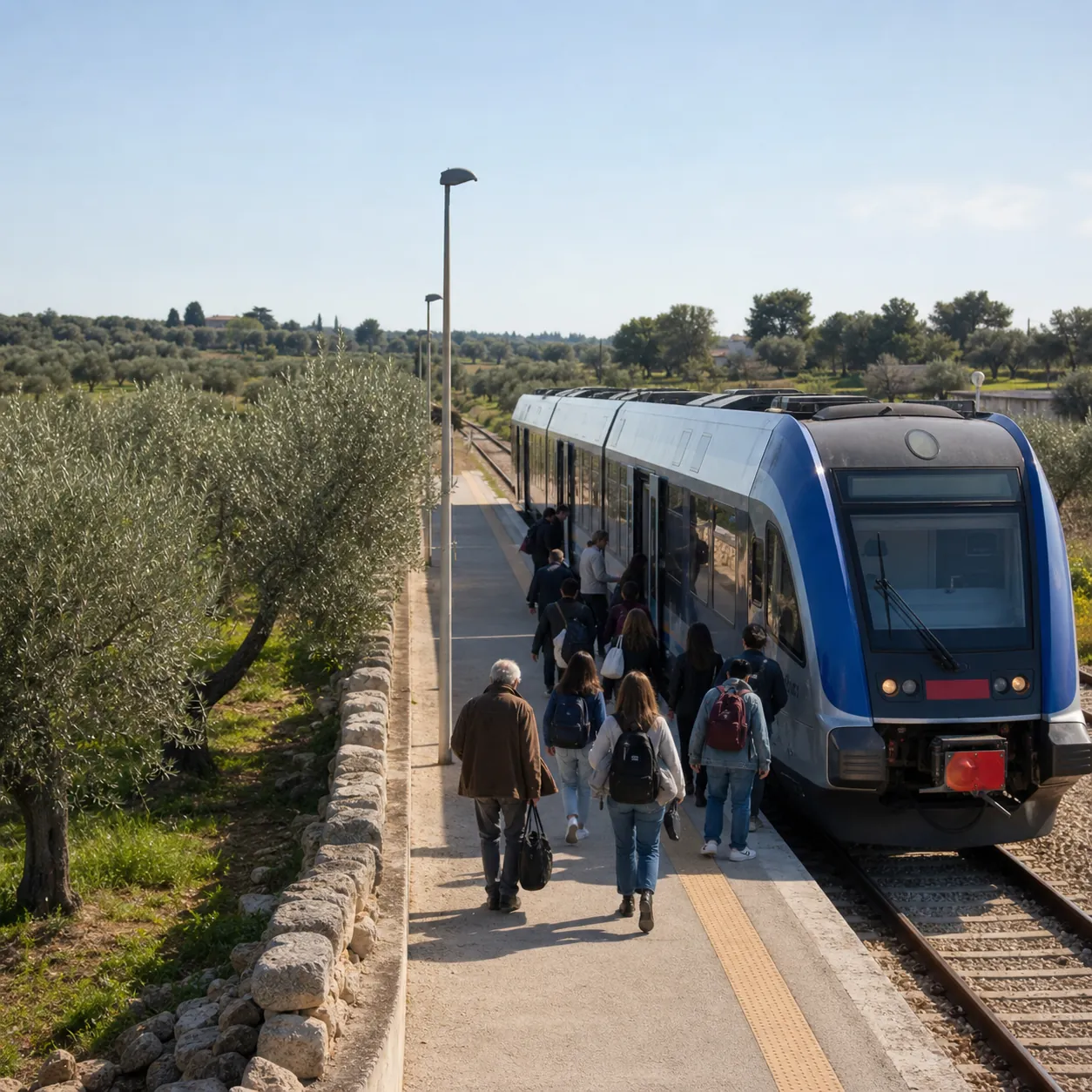
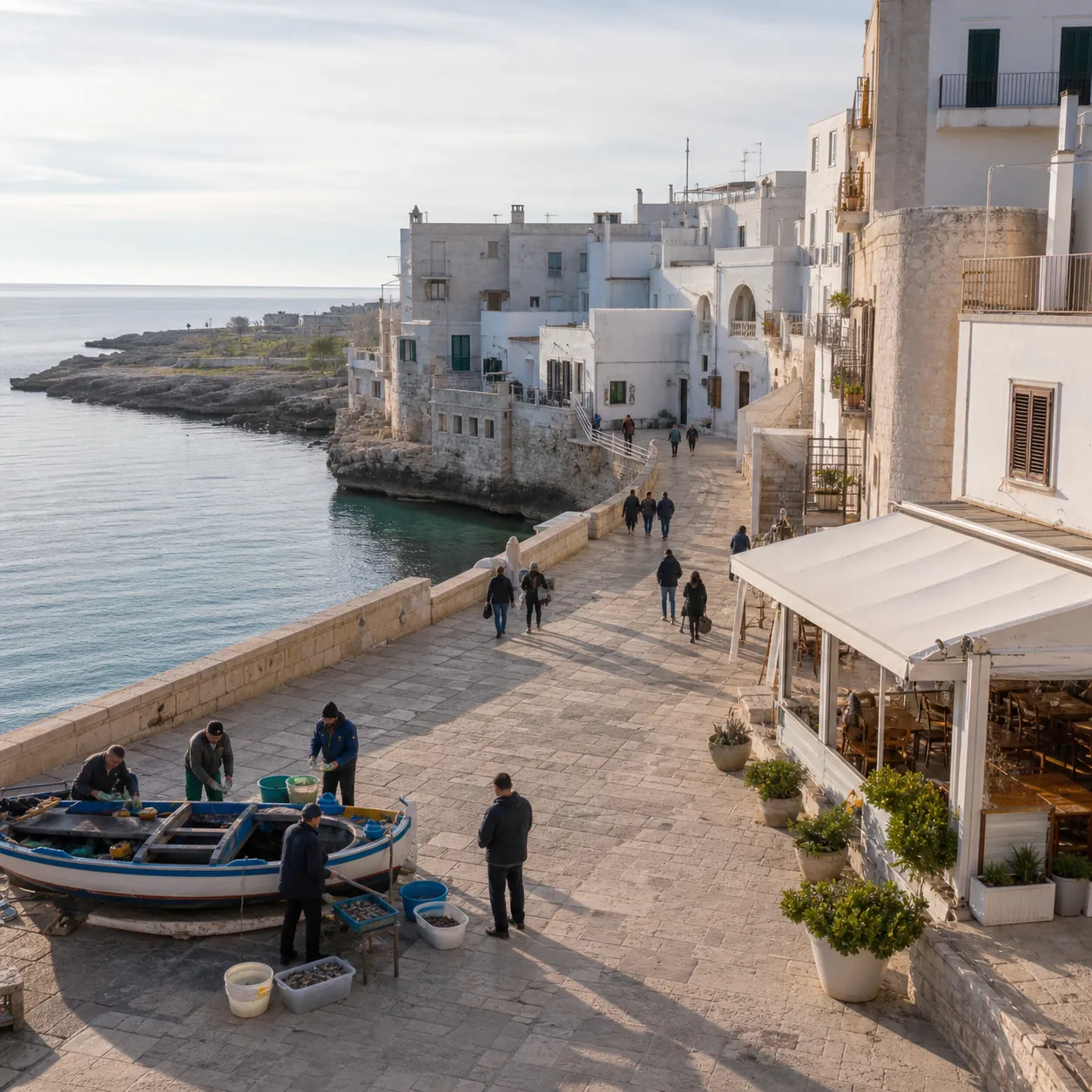
Illustrative scenes of regional life, created with AI.
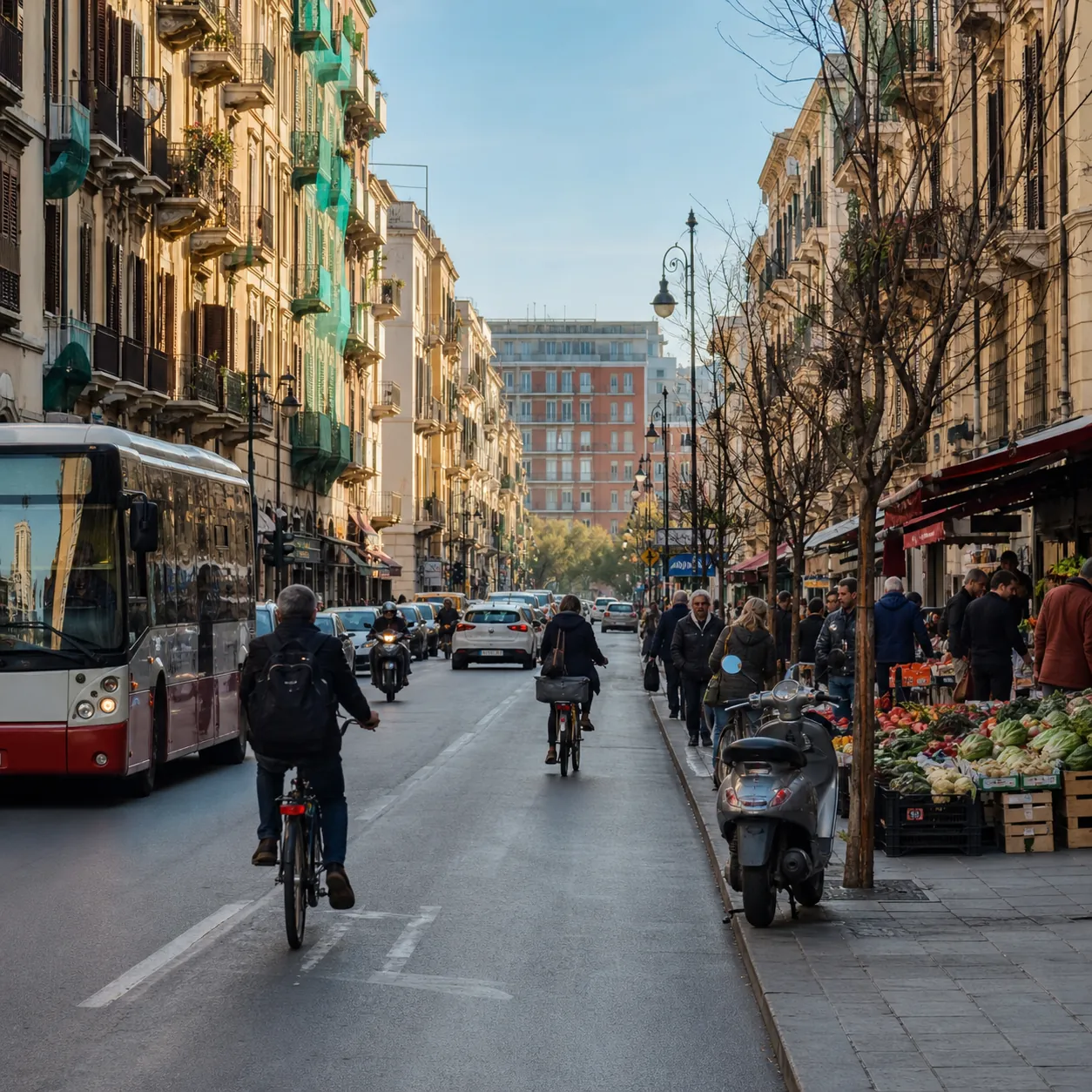
Puglia’s whitewashed towns, olive groves and long coastline are immediately appealing—but everyday life here is not the same everywhere.
Bari is a busy regional capital with universities, hospitals, offices, major shops and extensive transport connections. It offers a genuinely urban lifestyle, complete with commuting, traffic and active neighbourhoods.
Cities such as Lecce, Brindisi, Taranto and Foggia have their own character and provide different combinations of work, services and cultural life. Smaller towns in the Valle d’Itria or Salento can feel slower and more personal, while rural living may require considerably more independence.
In many communities, daily life remains closely connected to the local bar, bakery, market and evening passeggiata. Relationships matter, and becoming a familiar face can make settling in much easier. Speaking Italian helps enormously when managing services, administration and local connections.
Transport varies by area. Regional trains link numerous towns, but they do not make every rural or coastal location convenient. A car is often useful—and sometimes essential—particularly if you live outside a town or need regular access to healthcare, schools or larger shops.
Summer changes Puglia dramatically. Coastal towns and famous destinations become crowded, busy and expensive, while winter can be far quieter. Some seasonal businesses close, although established towns continue to support year-round communities. A location that feels wonderfully peaceful in May may feel isolated in January—or overwhelmed in August.
The long, hot summer also shapes daily routines. Errands are often completed earlier, afternoons become quieter and social life moves into the evening. Older stone homes and trulli are beautiful, but comfort, heating, ventilation and maintenance should be considered alongside appearance.
Puglia can offer community, outdoor living and a strong local identity. The right choice depends on whether you want Bari’s activity, a connected provincial town, the countryside or a seasonal coastal lifestyle.
05 / Puglia
Property market
Puglia has become one of southern Italy’s best-known international property destinations—but it is important not to treat the whole region as one market.
Bari’s city market, established coastal destinations and smaller inland communities need to be considered separately.
International buyers are often drawn to the Valle d’Itria, Ostuni, Monopoli, Polignano a Mare, Lecce and parts of Salento. Demand for beautifully restored trulli, masserie and properties close to the coast has increased prices in the most desirable areas.
However, the Puglia seen in holiday photographs is only part of the market.
Bari has strong year-round demand, employment, transport connections, universities and extensive services. A city apartment here is a completely different proposition from a trullo in the countryside or a holiday home near the sea.
Traditional properties need particularly careful due diligence. With trulli and masserie, buyers should establish:
- Whether every building and extension is legally recorded
- Whether previous alterations received the correct permission
- The condition of roofs, stonework and foundations
- Legal access and accurate land boundaries
- Water supply, wells, drainage and septic systems
- The condition and permitted management of agricultural land
- The realistic cost of heating, cooling and renovation
Whitewashed townhouses in historic centres can also present access, parking, damp and maintenance issues. Coastal homes require scrutiny for salt exposure and humidity, while services and rental demand may be highly seasonal in some locations.
Puglia’s popularity does not guarantee that every property will produce a strong rental return. The most photographed areas can also have more competition, higher purchase prices and increasingly demanding visitors.
This is a region with genuine opportunity—but the right property depends on whether you want a permanent home, a personal retreat, a rental business or a long-term investment.
This guide offers general regional context. Local services, conditions and property rules should be checked for your chosen location and plans. Property decisions need individual technical, legal and financial advice.