01 / Sicily
Introduction
Sicily is an island of extraordinary contrasts, where every area offers a completely different way of life.
From Palermo’s energy and the Baroque beauty of the southeast, to Mount Etna’s dramatic landscape, peaceful countryside and an astonishing coastline, Sicily is not one property market but many.
Why consider buying in Sicily?
A warm climate and a wonderfully rich culture
Everything from historic townhouses to rural homes and coastal apartments International airports in Palermo and Catania Exceptional food, architecture and a strong sense of place Attractive possibilities outside the most famous destinations
What should buyers consider carefully?
Prices and demand vary enormously between locations
Older and rural properties require thorough legal, cadastral and structural checks Transport and services can be limited in more remote areas Coastal, seismic and volcanic conditions make location-specific due diligence essential Heat, water supply and year-round maintenance should be considered before buying
Sicily rewards buyers who look beyond the beautiful photographs and take time to understand each area properly.
02 / Sicily
Food & lifestyle
Sicily is a place where food tells the story of every civilisation that has crossed its shores.
Greek, Roman, Arab, Norman and Spanish influences have all left their mark, creating one of Italy’s richest and most recognisable cuisines. You can taste that history in the use of citrus fruit, almonds, pistachios, saffron, aubergines, ricotta and sweet-and-sour flavours.
Sicilian street food is part of everyday life. In Palermo’s markets, you will find panelle and arancine; travel east and they are more often called arancini—a friendly debate that the island may never settle! There is also sfincione, fried fish and countless local specialities that change from one town to the next.
At the table, pasta alla Norma, pasta con le sarde and caponata sit alongside seafood, swordfish and regional meat dishes. Desserts are impossible to ignore: cannoli, cassata, almond pastries and Modica chocolate. And a Sicilian summer morning would not be complete without granita and a warm brioche col tuppo—sometimes enjoyed for breakfast.
Food in Sicily is expressive, colourful and social. Markets are noisy and theatrical, Sunday lunches can last for hours, religious festivals bring entire communities into the streets, and the evening passeggiata turns piazzas into shared living rooms.
The rhythm varies across the island. Palermo, Catania and the smaller towns each have their own character, while coastal communities, inland villages and the slopes of Mount Etna offer very different ways of life. What unites them is a powerful local identity and an instinct for hospitality.
Sicily reminds us that understanding a region means looking beyond its monuments. Its real story is also found at the market, around the family table and in the traditions that continue from one generation to the next.
03 / Sicily
Places & experiences
Few places offer as many completely different experiences as Sicily.
You can walk across the volcanic landscape of Mount Etna in the morning, explore an ancient Greek temple in the afternoon and finish the day beside the sea—or in the lively streets of Palermo, Catania or Syracuse.
Sicily’s long history is visible everywhere. At Agrigento, the Valley of the Temples preserves one of the world’s most remarkable collections of ancient Greek architecture. In Palermo, Arab-Norman monuments tell the story of the cultures that shaped the island, while Syracuse and its island of Ortigia combine Greek history, baroque architecture and waterfront life.
Further south, the towns of the Val di Noto—including Noto, Ragusa and Modica—offer magnificent churches, staircases, balconies and piazzas built from warm local stone. Simply walking through these towns is an experience in itself.
For something completely different, you can hike on Mount Etna, visit vineyards growing in volcanic soil or take a boat towards the Aeolian or Egadi Islands. Each smaller island has its own landscape and personality, from volcanic cliffs and black beaches to peaceful harbours and clear water.
Then there are Sicily’s everyday experiences: wandering through a market, watching an archaeological site turn golden at sunset, taking a boat around the coast or sitting in a piazza while life carries on around you.
Sicily is not one simple destination. It is a collection of landscapes, cities, islands and histories—and you could return many times without experiencing it in quite the same way.
04 / Sicily
Everyday life
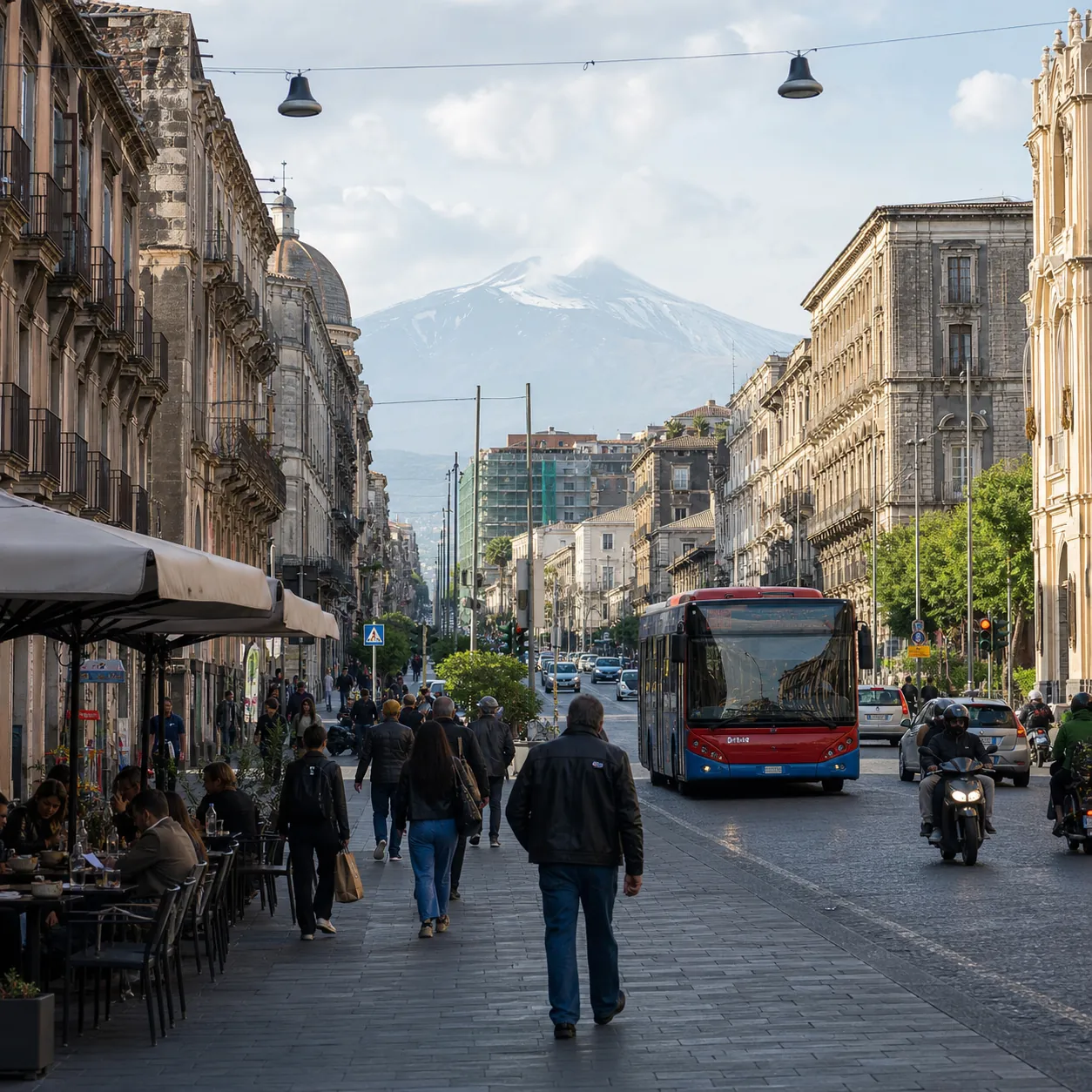
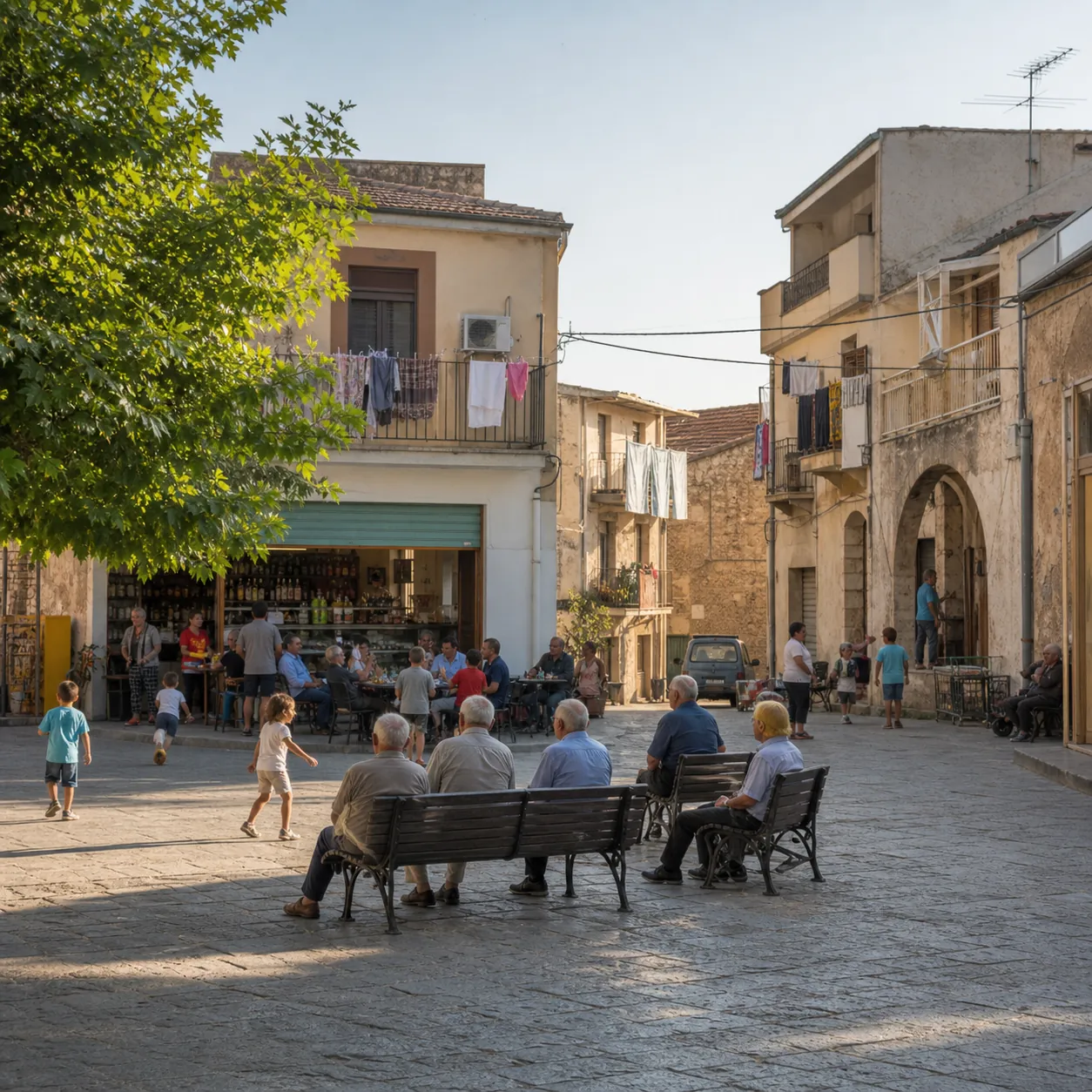
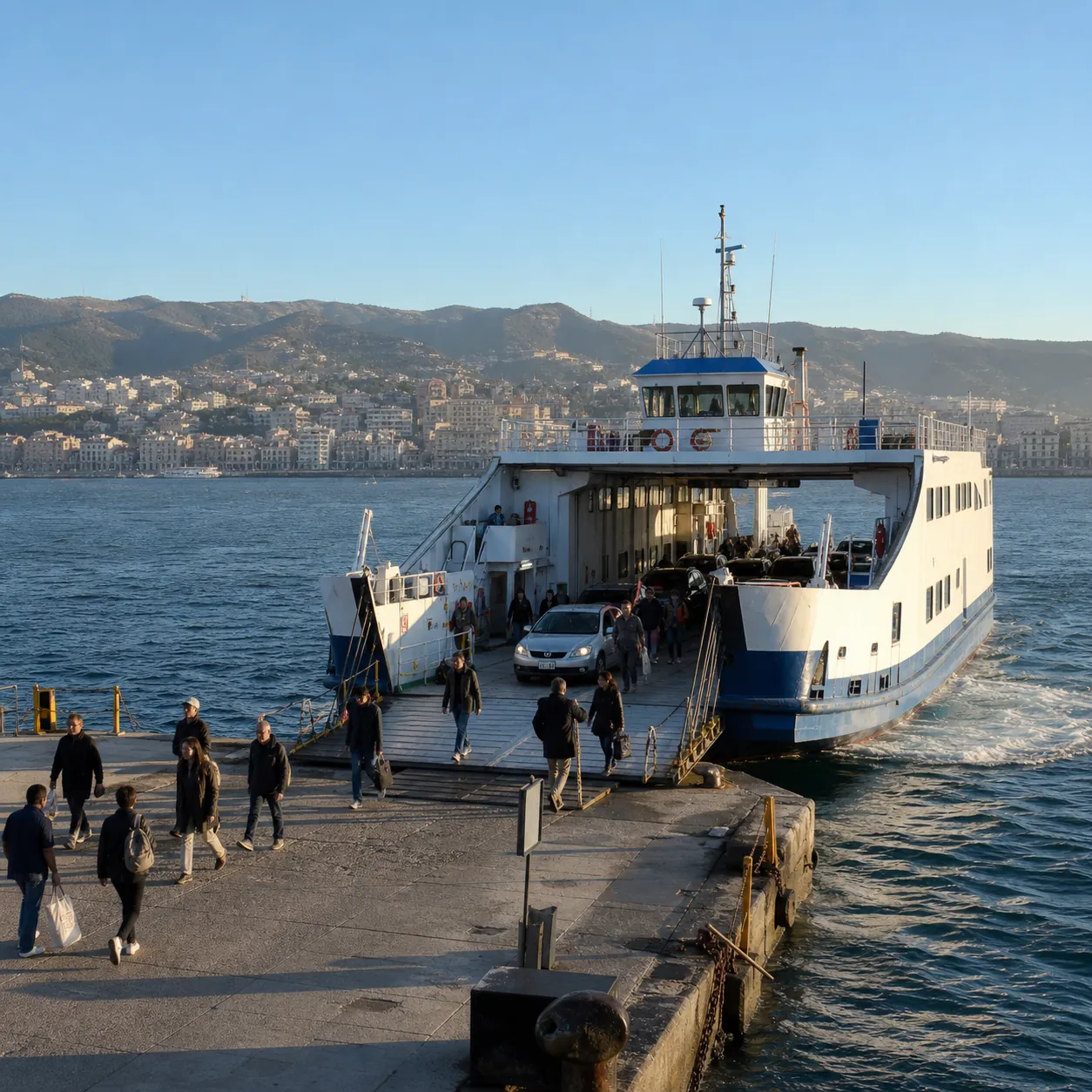
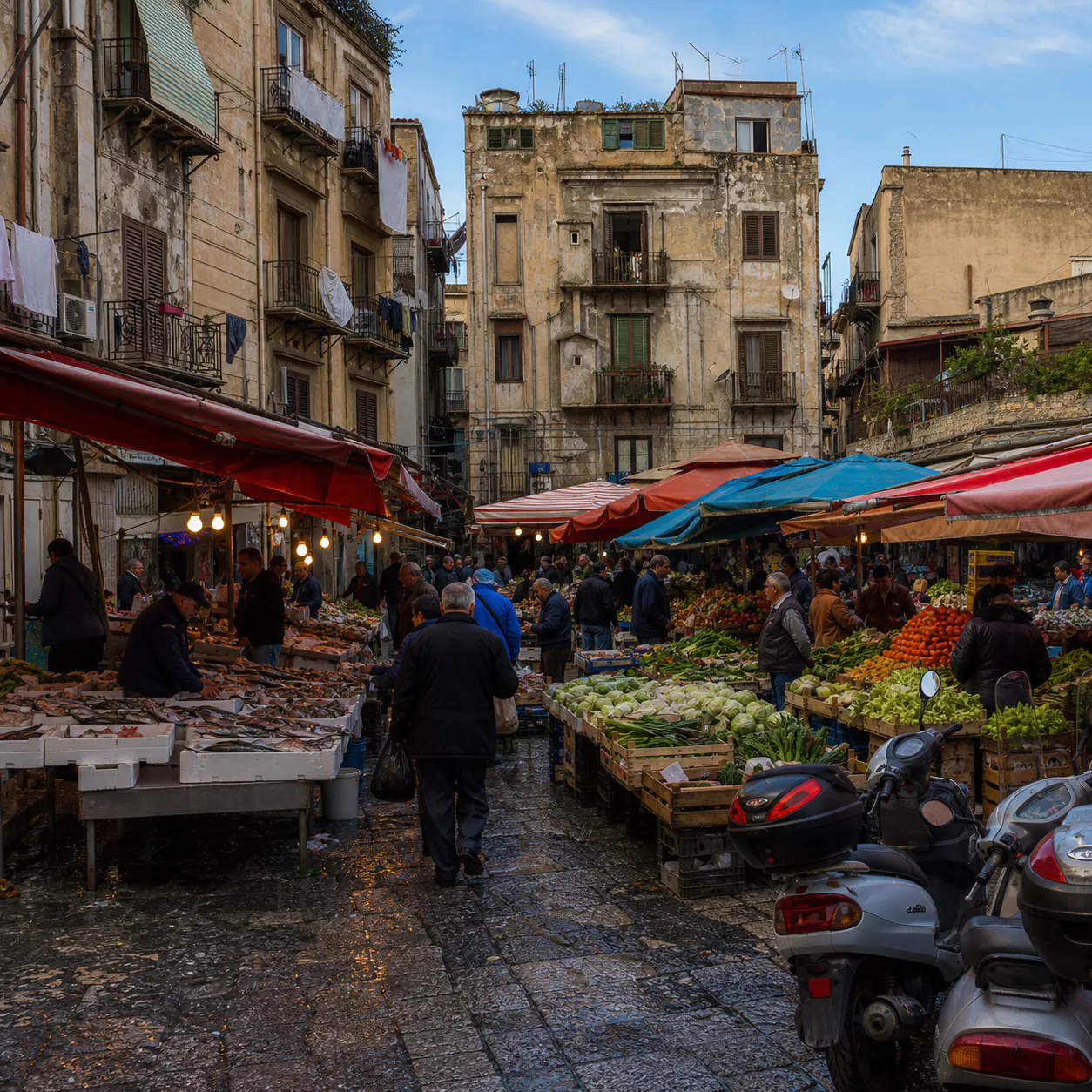
Illustrative scenes of regional life, created with AI.
Sicily is often presented through dramatic coastlines, ancient monuments and wonderful food. All of that is real—but everyday life on the island is far more varied.
Palermo and Catania are energetic, densely populated cities where markets, traffic, work, family life and social activity share the same streets. They offer universities, hospitals, shops and cultural life, but they can also be busy, noisy and demanding.
Move into the smaller towns or inland communities and the rhythm changes. The piazza, the local bar and neighbourhood shops often remain central to daily life. Relationships and trust matter, and newcomers may find that becoming part of the community takes time—but genuine connections can be extremely rewarding.
Transport depends greatly on location. Larger cities and some principal routes have public connections, but a car is often useful elsewhere. Sicily is a large island, and travelling between areas can take considerably longer than visitors expect. Flights, ferries and the regular connections across the Strait of Messina are also part of island life.
Coastal resorts and smaller islands can change dramatically with the seasons. Summer brings visitors, traffic and late evenings; winter may be peaceful, with fewer services and reduced opening hours. Palermo, Catania and other established towns generally provide a more consistent year-round routine.
Daily life is sociable and frequently lived outdoors: shopping at the market, stopping at the bar, meeting in the piazza and taking an evening walk. Yet practical life can also involve congestion, uneven local services and bureaucracy that requires patience. Learning Italian is important, even though you will also hear Sicilian dialects and strong local expressions.
Sicily rewards people who embrace it as it is—not those expecting it to operate like another country. Choosing the right part of the island depends on whether you want urban energy, a connected provincial town, rural tranquillity or seasonal coastal life.
05 / Sicily
Property market
Sicily regularly attracts international buyers with beautiful architecture, dramatic landscapes and property prices that can appear remarkably accessible.
Provincial and local differences are substantial, so the regional average should be treated only as a starting point.
The region’s apparent affordability does not tell the whole story.
Palermo and Catania are large, active cities with year-round demand, employment, universities, hospitals and transport. Prices can vary enormously between individual neighbourhoods, buildings and even different floors within the same building. Condition, lifts, parking, noise and the management of communal areas can all affect value and suitability.
Ortigia, Taormina, Cefalù and other internationally recognised destinations operate very differently. Historic character, sea views and tourism demand can create a premium, while restrictions, access, parking and the maintenance of older buildings require careful thought.
In the Val di Noto and parts of south-eastern Sicily, buyers may find Baroque townhouses, country properties, masserie and homes surrounded by olive, almond or carob trees. These can be extremely appealing, but rural access, water, drainage, land boundaries and renovation costs must be investigated properly.
Smaller inland towns may offer very low prices. However, buyers should not confuse a cheap acquisition with an inexpensive completed project. A house purchased for a modest sum may require extensive structural work, a new roof, updated services and professional fees. It may also sit in an area with limited resale or rental demand.
Before buying in Sicily, ask
- Does the location work outside the tourist season?
- Is the property structurally sound?
- Does its actual condition correspond with its plans and official records?
- Are all alterations and extensions authorised?
- Is there reliable access to water, electricity, drainage and the public road?
- What will renovation genuinely cost?
- Is a predicted holiday-rental return realistic after management, maintenance and quieter months?
- Would you still want this property if it produced no rental income?
The Italian Revenue Agency advises buyers to obtain as much information as possible and highlights cadastral and mortgage-record checks before purchase. A notary performs important legal checks, but an independent technical inspection remains essential, particularly for older or altered properties.
Sicily can offer extraordinary character and genuine value. The opportunity lies not in finding the cheapest house, but in recognising the property that is legally sound, realistically priced and suitable for the buyer’s intended life.
This guide offers general regional context. Local services, conditions and property rules should be checked for your chosen location and plans. Property decisions need individual technical, legal and financial advice.