01 / Trentino-Alto Adige
Introduction
At Italy’s northern edge, bordering Austria and Switzerland, Trentino–Alto Adige is a region of dramatic mountains, clear alpine lakes, historic towns and beautiful valleys.
The region is made up of two autonomous provinces: Trentino, where Italian is predominantly spoken, and Alto Adige or South Tyrol, where German is widely spoken. Ladin is also spoken in several Dolomite communities. This blend of Italian, Austrian and Ladin influences gives the region a character unlike anywhere else in Italy.
The Dolomites are its unmistakable symbol, with spectacular landscapes that attract visitors throughout the year. In summer, the mountains offer walking, climbing and cycling; in winter, they become one of Europe’s best-known destinations for skiing and other snow sports.
Lago di Braies is famous for its emerald water and mountain reflections, but it is only one of many beautiful lakes in the region. Lake Garda also reaches into southern Trentino, bringing a milder climate and a more Mediterranean atmosphere.
Trento is known for its elegant historic centre, Renaissance buildings and important place in European history. Bolzano combines Italian and Central European influences, while Merano is celebrated for its spa tradition, gardens and relaxed elegance.
Beyond the towns, the region is filled with castles, vineyards, apple orchards and peaceful alpine villages. Daily life is closely connected to nature and the changing seasons, with a strong emphasis on outdoor living, local traditions and well-organised communities.
For someone imagining a life in Italy, Trentino–Alto Adige offers something very distinctive: the beauty and lifestyle of the Alps combined with Italian culture, food and warmth.
The Dolomites
An alpine lake Trento, Bolzano or Merano A peaceful mountain village
02 / Trentino-Alto Adige
Food & lifestyle
In Trentino-Alto Adige, Italian, Austrian and Ladin influences meet among the valleys, vineyards and dramatic peaks of the Dolomites.
The region is formed by the autonomous provinces of Trento and Bolzano, and the cultural differences between Trentino and Alto Adige—also known as Südtirol—can be heard in the languages, seen in the architecture and tasted in the food.
This is generous mountain cooking, created to provide warmth after a day outdoors. Canederli—bread dumplings often served in broth or with melted butter—are among the best-known dishes. You will also find speck, carne salada, polenta, game, mushrooms and excellent cheeses produced in the mountain valleys.
Apples are an important part of the landscape and local economy, appearing in desserts such as strudel. The region also produces distinctive wines, including Teroldego, Lagrein and Gewürztraminer, alongside Trentodoc sparkling wine.
Life here follows the seasons. Winters are shaped by skiing and snow-covered villages; warmer months bring hiking, cycling and long days around the lakes and mountain paths. Towns are generally orderly and well connected, while the valleys offer a quieter rhythm and a strong sense of local identity.
For anyone considering a home here, it is important to understand that one valley can feel very different from another. Language, altitude, climate, access and seasonal tourism can all influence daily life.
Would your ideal Italian lifestyle include mountain views, Alpine food and four very distinct seasons?
03 / Trentino-Alto Adige
Places & experiences
Trentino-Alto Adige is one of Italy’s most distinctive regions: a place where Italian and Central European influences meet beneath some of the country’s most dramatic mountain scenery.
The Dolomites are the region’s great natural landmark. Their pale rock peaks change colour with the light, creating unforgettable landscapes at sunrise and sunset. In summer, the mountains attract walkers, climbers and cyclists; in winter, the same valleys become centres for skiing and other snow activities. The scenery is spectacular, but every valley has its own character and rhythm.
Bolzano provides a fascinating introduction to the region’s bilingual and multicultural identity. Its historic centre has colourful buildings, arcaded streets and inviting squares, while the mountains remain a constant presence beyond the city. Italian and German are both widely used, and the architecture, food and local traditions reflect the meeting of different cultures.
Lake Braies—Lago di Braies or Pragser Wildsee—is one of the region’s most recognisable destinations. Its clear Alpine water, traditional wooden boats and steep mountain backdrop create a beautiful setting. Visiting early in the day or outside the busiest season offers a much quieter experience.
Merano presents yet another side of the region. Its elegant promenades, gardens and historic spa culture are surrounded by mountains, yet the sheltered climate also supports palm trees and Mediterranean vegetation. It is an unusual and attractive combination of Alpine and southern influences.
Trentino-Alto Adige reminds us that Italy is not culturally or geographically uniform. Language, climate, architecture and everyday life can feel noticeably different here from other parts of the country.
04 / Trentino-Alto Adige
Everyday life
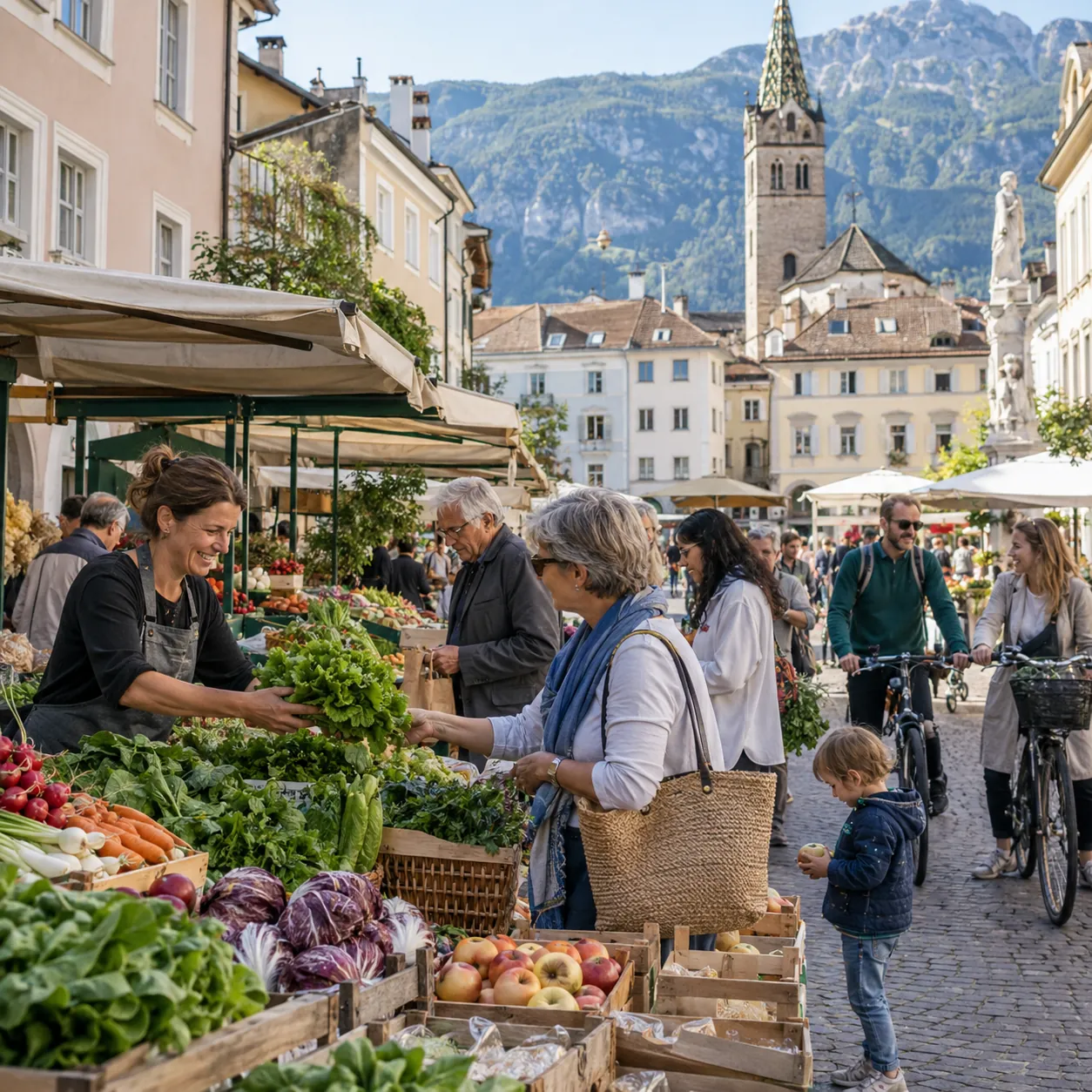
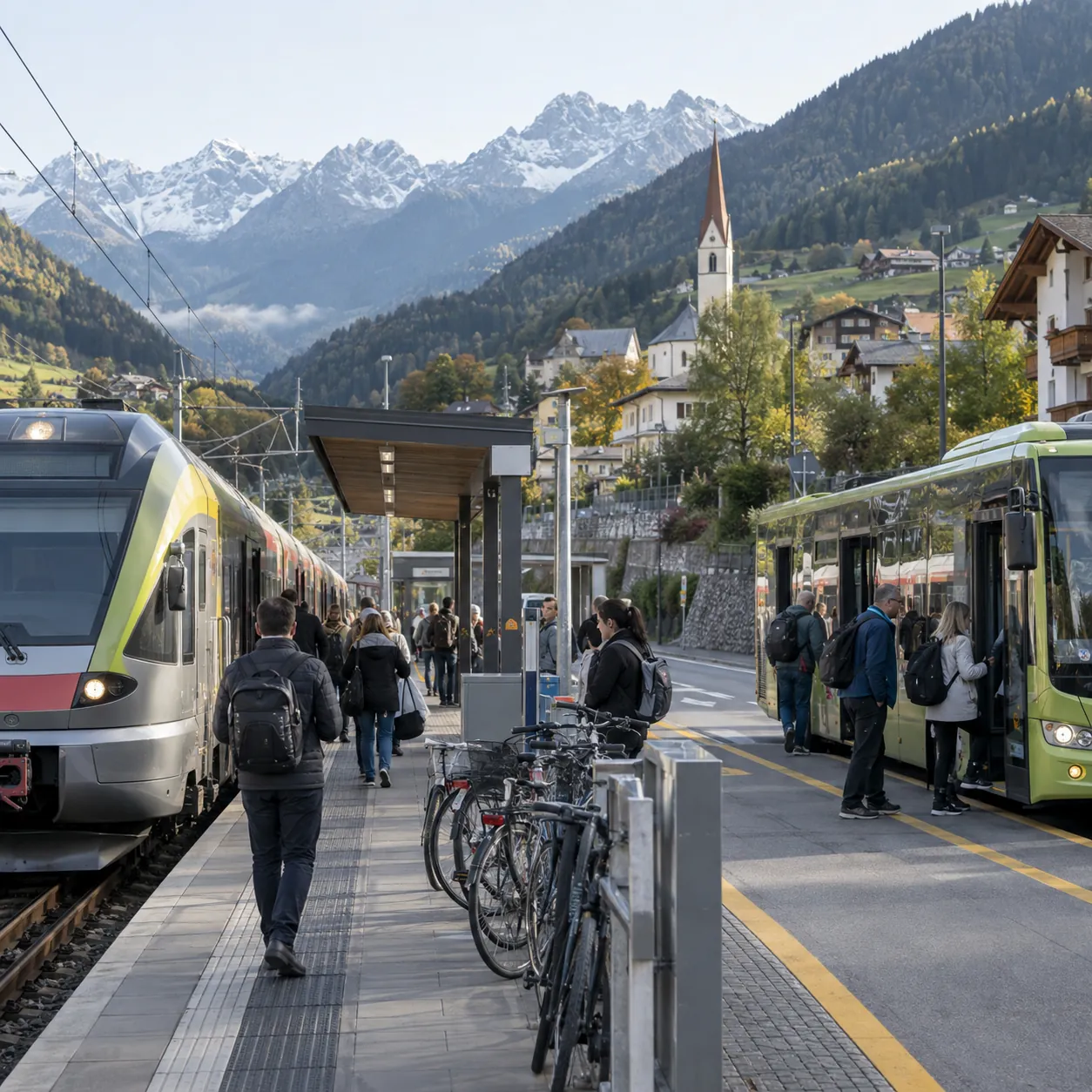
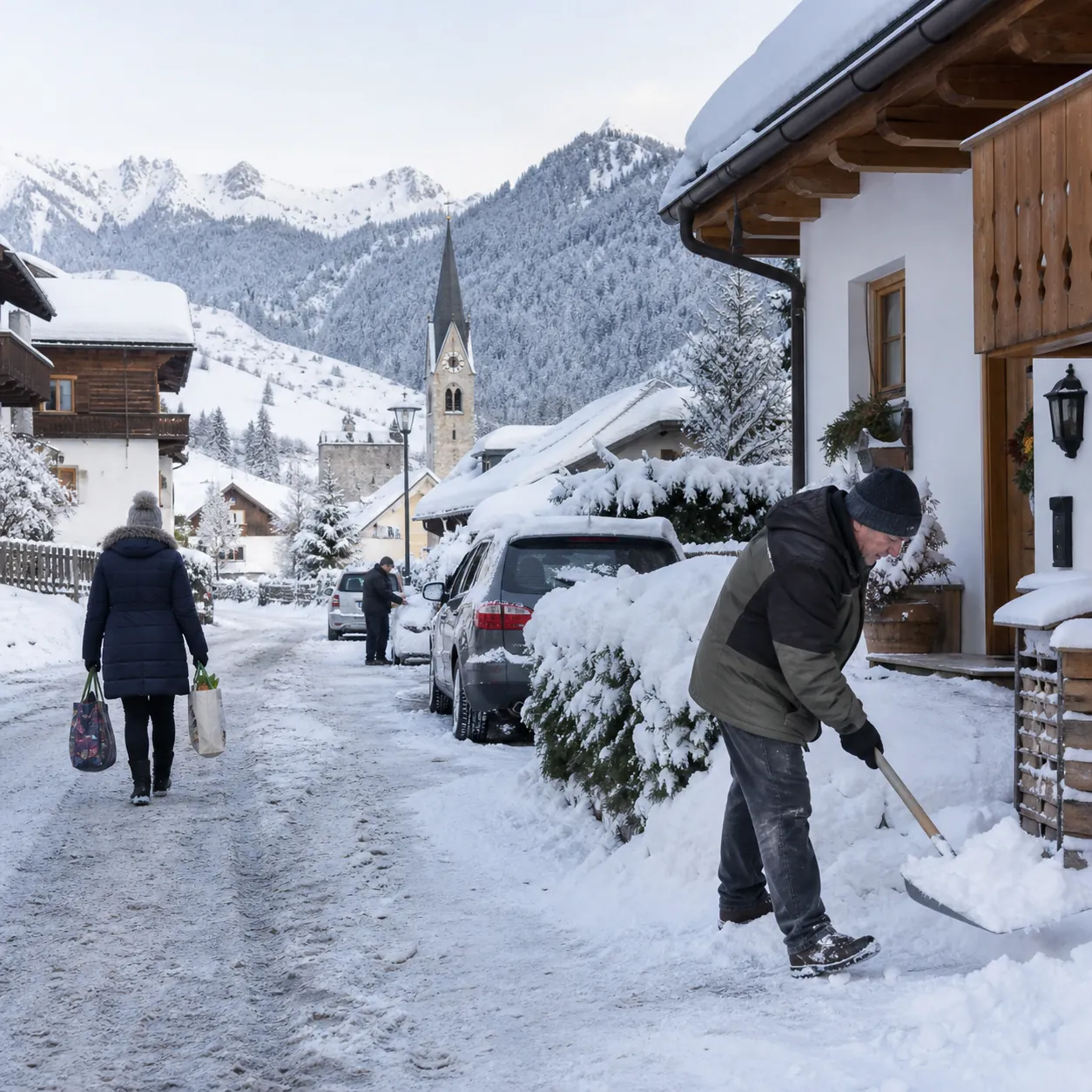
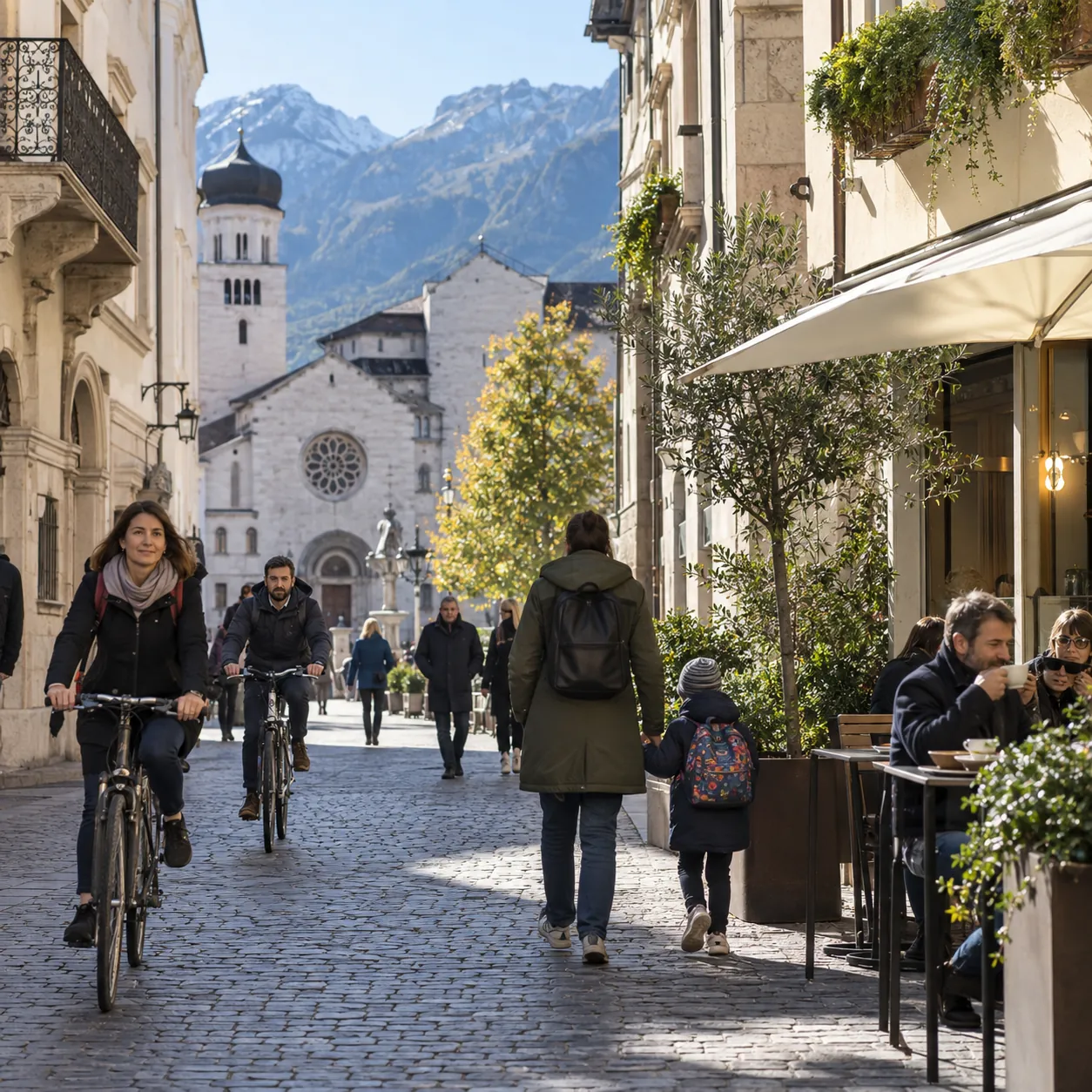
Illustrative scenes of regional life, created with AI.
Living in Trentino-Alto Adige can offer an exceptional quality of life, but it is important to understand that this is not one uniform place.
The region is formed by two autonomous provinces with quite different identities. Trentino is predominantly Italian-speaking, while in Alto Adige/South Tyrol both German and Italian are widely used, with Ladin spoken in some valleys. The language and culture of the particular town or village can make a real difference to daily life, schooling, administration and how easily a newcomer becomes part of the community.
Trento and Bolzano are attractive, well-organised cities with good services, public transport, cycle routes, shops and cultural activities. They offer the practicality of urban life without the scale and intensity of Italy’s largest cities. However, this quality of life is reflected in housing costs, particularly in desirable locations.
In smaller towns and mountain villages, life is quieter and closely connected to the seasons. Communities can be welcoming but well established, so integration may take time. Public transport is good in many areas, although a car can still be necessary when living away from the main valleys.
Winter is not simply a beautiful background. Snow, ice, heating costs and access all become part of ordinary life. Tourist destinations may be extremely busy during the ski season and much quieter at other times. Summer brings walkers, cyclists and visitors, while residents make the most of the lakes, forests and mountains.
It can be an excellent region for someone who values nature, order, outdoor living and dependable services. It may be less suitable for a person looking for inexpensive property, lively late-night life or complete spontaneity.
The most important question is not simply whether you love the mountains. It is whether you would enjoy the rhythm and practical realities of living among them throughout the year.
Discover independent guidance for buying property in Italy at mgvendone.com
05 / Trentino-Alto Adige
Property market
Trentino-Alto Adige combines two autonomous provinces, several languages, strong local economies and some of Italy’s most desirable mountain destinations.
The differences between the provinces of Bolzano-Bozen and Trento are important. The two provincial capitals, resort villages and more remote valleys need separate local research.
In the most sought-after Dolomite resorts, scarcity, tourism and second-home demand can push prices considerably higher. Elsewhere, smaller towns and valleys may offer greater value, but access to employment and services varies.
This is also a region where local rules matter. Language, provincial administration, protected landscapes and restrictions or procedures affecting second homes and tourist use can differ. Advice that applies in one municipality may not apply in another.
For mountain property, buyers should examine insulation, heating, roof and snow loads, access, parking and condominium costs. Rental expectations should be based on genuine occupancy across the seasons, not simply the nightly prices advertised at peak periods.
This guide offers general regional context. Local services, conditions and property rules should be checked for your chosen location and plans. Property decisions need individual technical, legal and financial advice.