01 / Umbria
Introduction
Known as the “Green Heart of Italy,” Umbria is the only region in central Italy without a coastline. What it offers instead is a landscape of rolling hills, olive groves, vineyards, forests and beautifully preserved medieval towns.
Assisi is undoubtedly one of its treasures. Built from pale pink and cream-coloured stone on the slopes of Mount Subasio, it has a peaceful atmosphere that is difficult to describe until you experience it. The Basilica of Saint Francis, the winding streets and the magnificent views across the Umbrian valley make it a truly unforgettable place.
But Umbria has much more to discover.
There is Orvieto, dramatically positioned on a volcanic plateau and home to one of Italy’s most magnificent cathedrals; Perugia, the lively regional capital; elegant Spoleto; and Lake Trasimeno, where life moves at a wonderfully gentle pace.
Umbria may be quieter than neighbouring Tuscany, but that is part of its appeal. It offers history, culture, beautiful countryside and an authentic Italian lifestyle—often without the same crowds.
For anyone dreaming of a peaceful home in Italy, surrounded by nature yet within reach of Rome and Florence, Umbria deserves serious consideration.
- Images:
- 1. Assisi and the Basilica of Saint Francis
- 2. Orvieto and its cathedral
- 3. Lake Trasimeno
- 4. An Umbrian hill town among olive groves
02 / Umbria
Food & lifestyle
Known as Italy’s “green heart,” Umbria is the only region in central Italy without a coastline. Its landscape of wooded hills, olive groves, vineyards and medieval towns gives its cuisine a distinctive, earthy character.
Umbrian food is built around the quality of its local ingredients.
Strangozzi—long, hand-rolled strands of pasta—are often served with black truffles, tomato or simple sauces that allow the ingredients to shine.
The area around Norcia is famous for norcineria, the traditional craft of preparing pork and cured meats. The connection is so strong that norcino has become the Italian word for a specialist pork butcher.
Other important regional products include the lentils of Castelluccio, farro, pecorino, saffron, extra-virgin olive oil and black truffles from areas such as Norcia and the Valnerina. Roast meats and porchetta also feature prominently on Umbrian tables.
Although Umbria has no sea, Lake Trasimeno contributes its own fishing traditions and local dishes.
The region produces notable wines, including Sagrantino di Montefalco, as well as wines from the Orvieto and Spoleto areas.
Life in Umbria tends to follow the landscape and the seasons. The olive harvest, village festivals and Sunday lunches still bring people together. Historic places such as Assisi, Perugia, Spello, Orvieto and Gubbio offer culture and beauty without the constant pace of Italy’s largest cities.
It is a region that often appeals to people looking for countryside, community and a quieter rhythm while remaining well placed in central Italy.
What would tempt you most at an Umbrian table: strangozzi with truffle, local cured meats or lentils from Castelluccio?
03 / Umbria
Places & experiences
Often called Italy’s “green heart,” Umbria has no coastline, but it offers wooded hills, historic towns, spiritual landmarks and a peaceful sense of continuity.
Assisi
Assisi is one of Italy’s most important spiritual destinations and one of Umbria’s most beautiful towns. The Basilica of Saint Francis overlooks the Umbrian valley, while pale-stone streets, churches and quiet viewpoints give the town an atmosphere that extends beyond its religious significance. Assisi truly is beautiful.
Perugia
Umbria’s regional capital is a lively university city built across a hilltop. Medieval streets lead towards Piazza IV Novembre and the Fontana Maggiore, while underground passages reveal earlier layers of the city. Perugia combines history with cafés, cultural events and year-round local life.
Orvieto
Orvieto rises dramatically from a plateau of volcanic rock. Its cathedral is magnificent, but the town also contains underground tunnels, wells, artisan workshops and viewpoints across the surrounding countryside. Even arriving and seeing the town above the valley is part of the experience.
The Marmore Falls
Near Terni, the Marmore Falls descend through several spectacular cascades surrounded by lush vegetation and walking paths. Originally engineered by the Romans, the waterfall combines natural beauty with a remarkable piece of ancient water management.
Umbria offers a quieter experience than some of Italy’s better-known regions, but certainly not an empty one. Its towns are rich in history, and the landscape encourages you to slow down and look more closely.
04 / Umbria
Everyday life
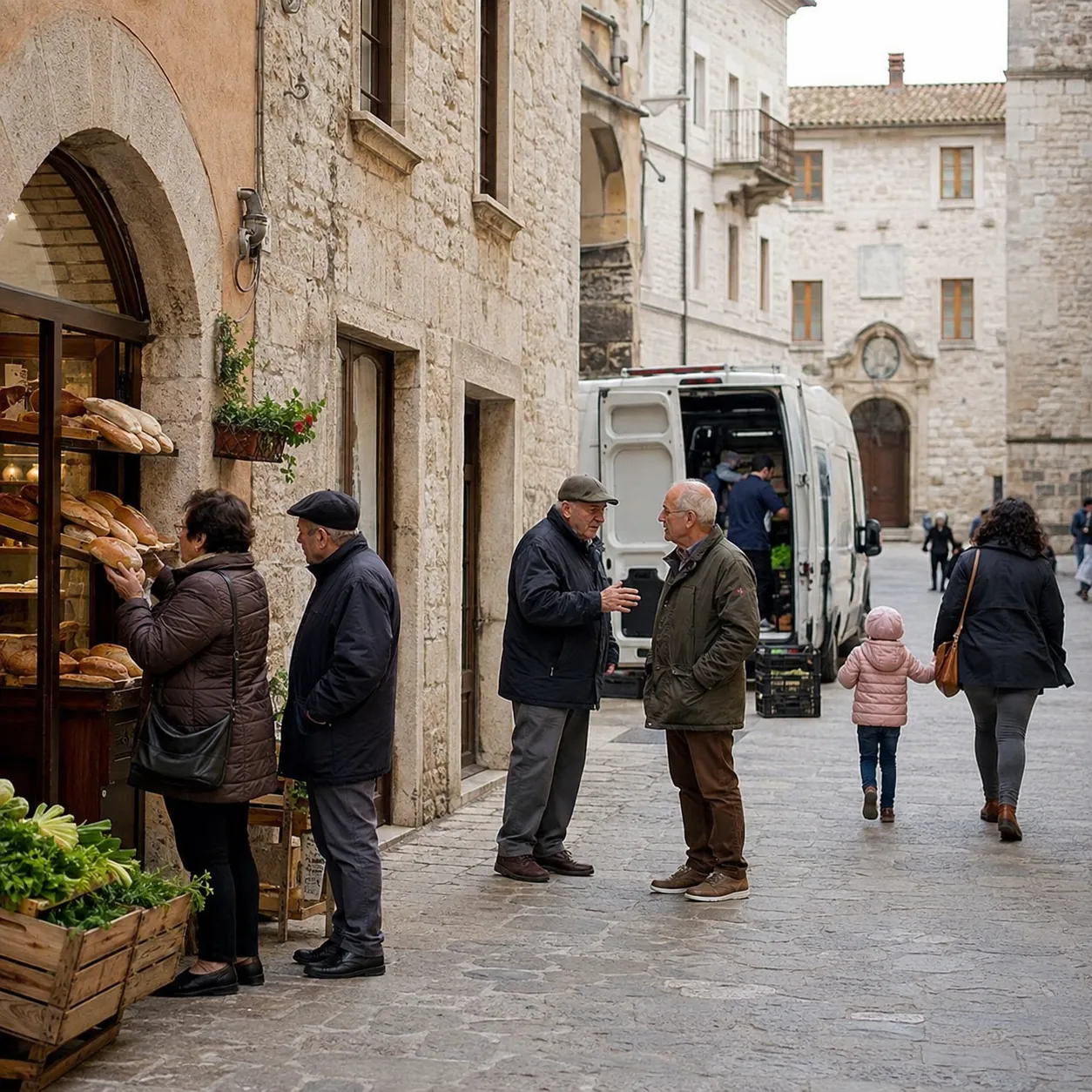
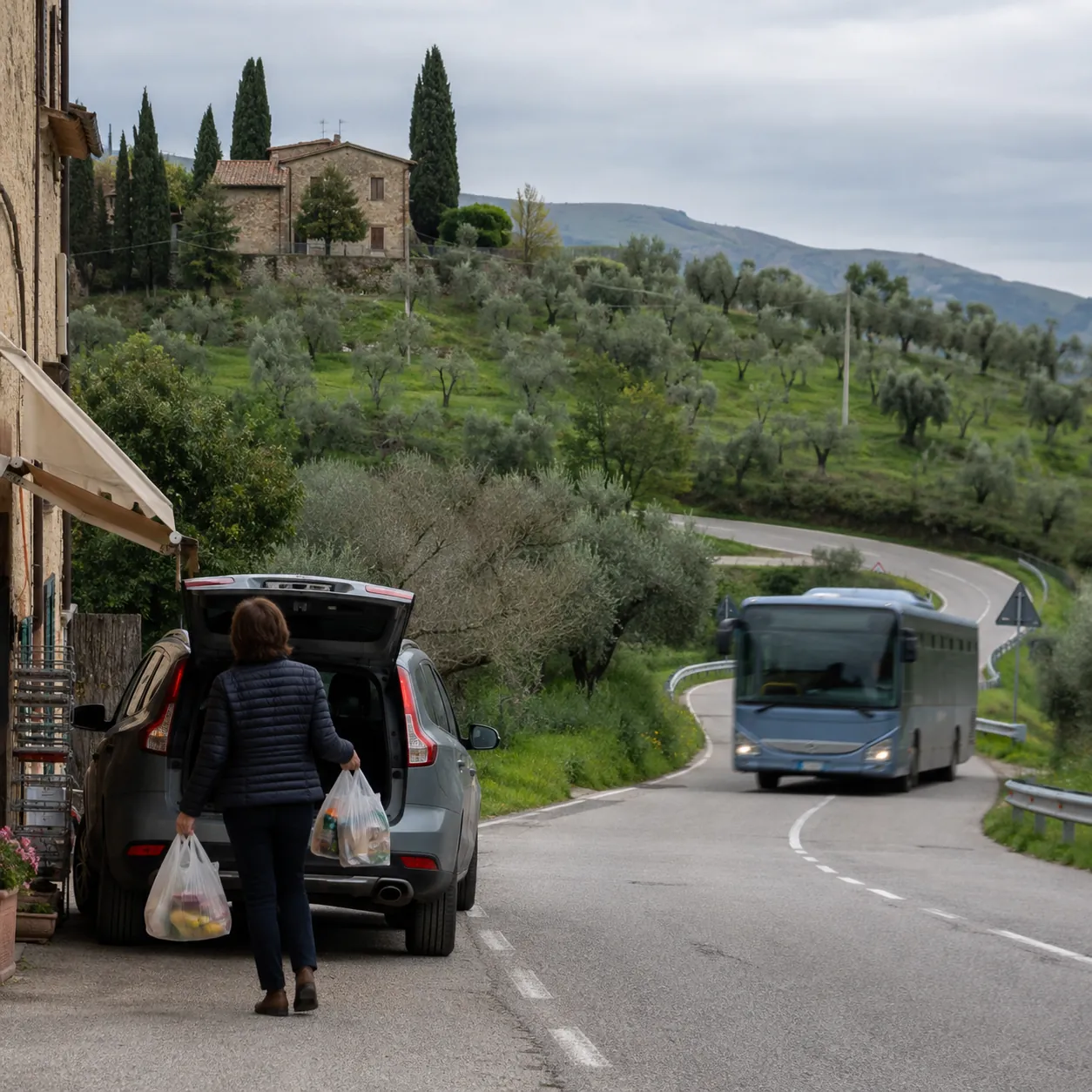
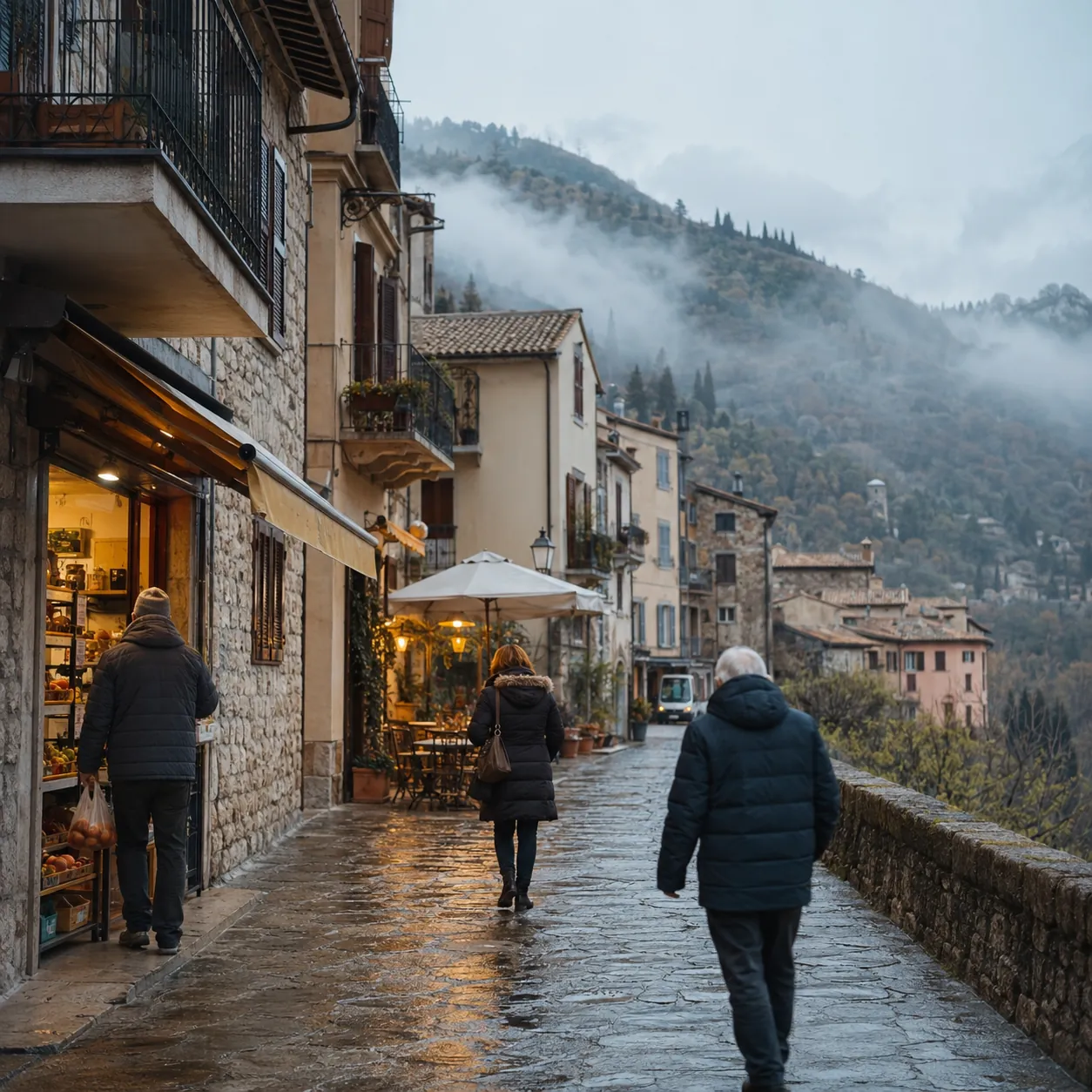
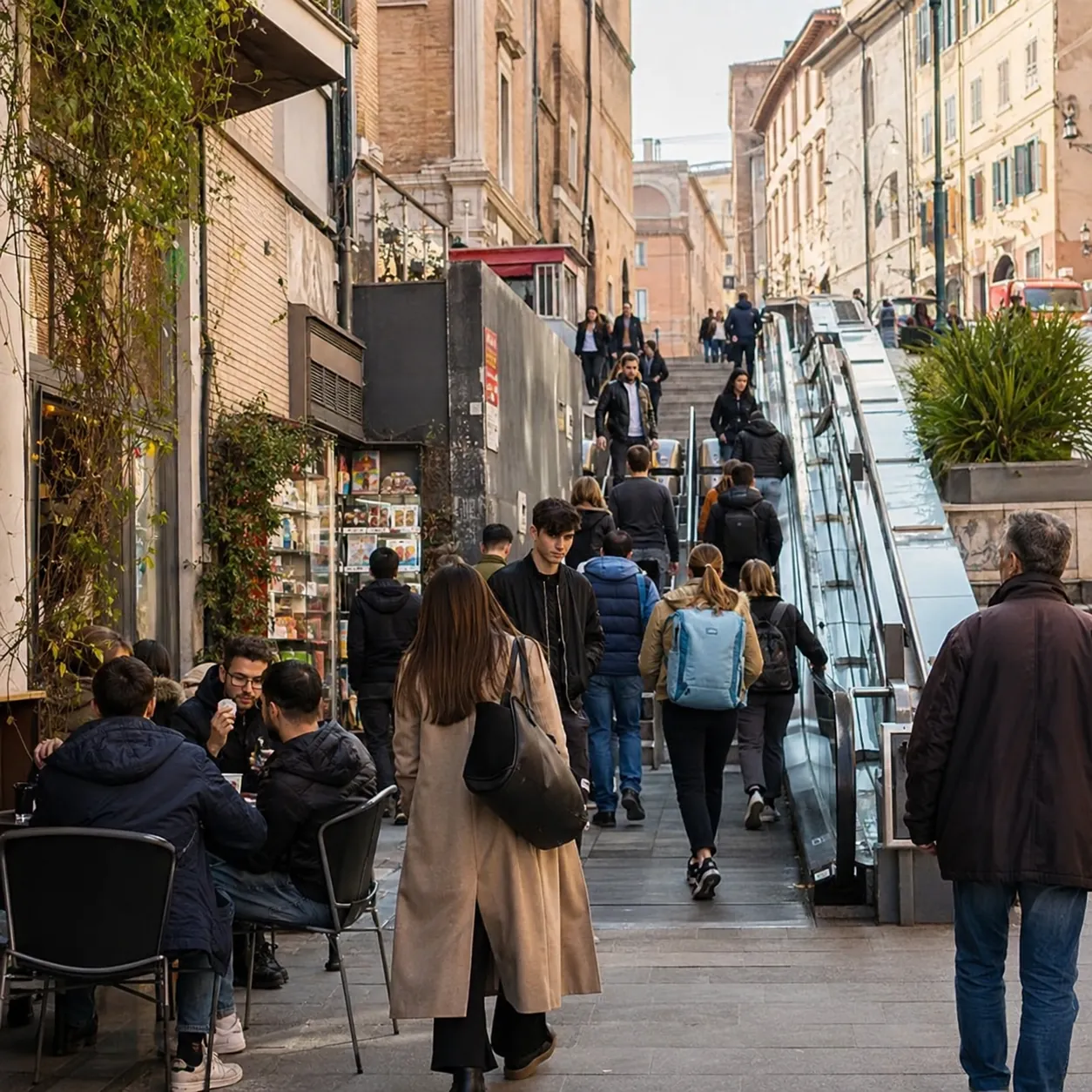
Illustrative scenes of regional life, created with AI.
Umbria is sometimes called Italy’s green heart. It offers historic hill towns, olive groves and a gentler pace of life—but its inland location and hilly landscape strongly influence everyday routines.
Perugia is the regional capital and its main centre for employment, education, healthcare and services. The university brings an international element, while escalators and the minimetro help residents negotiate a city built across steep hills.
Terni has a more industrial and practical character, while towns such as Spoleto, Gubbio, Foligno, Assisi, Orvieto and Città di Castello each offer different balances between tourism and year-round community life.
In smaller towns, daily routines may centre on the local bar, bakery, market and familiar shopkeepers. Relationships develop gradually, and speaking Italian is important for building a genuine life beyond the international community.
The countryside can provide peace, privacy and beautiful surroundings, but dependence on a car is common. Distances may appear short, yet hills and winding roads affect travelling times. Before choosing a rural home, access to shops, healthcare, public transport and essential services should be checked carefully.
Umbria has no coastline and fewer major transport hubs than some neighbouring regions. Railway connections are useful in certain towns, but travelling internationally may require reaching Rome, Florence or another larger centre.
Winters can be cold, wet and misty, and quieter hill towns may feel very different from their busy summer appearance. For some people, that tranquillity is exactly the attraction; for others, it may feel too isolated.
Umbria could suit someone looking for community, countryside and a slower rhythm—but it rewards people who are comfortable driving, speaking Italian and adapting to provincial life.
05 / Umbria
Property market
Umbria offers much of what attracts international buyers to central Italy—historic towns, rolling countryside, stone farmhouses and a slower pace of life—often at lower prices than neighbouring Tuscany.
Perugia provides the region’s principal urban market, with universities, healthcare, employment and year-round services. Historic-centre homes offer character but may involve restricted access, parking difficulties, stairs and complex renovation requirements.
Assisi has a strong international identity and visitor economy. Buyers considering a historic property should investigate heritage restrictions and whether their intended alterations or use will be permitted.
Lake Trasimeno appeals to buyers seeking scenery and outdoor living. Location within the lake area matters considerably: views, access, town services and proximity to transport can all influence demand.
Rural Umbria offers farmhouses, converted agricultural buildings and homes with olive groves or land. These properties can provide considerable value, but careful investigation is essential.
Buyers should establish
- Legal access and precise land boundaries
- Planning and cadastral compliance
- The authorised use of every building
- Structural and seismic condition
- Roof, damp, drainage and retaining walls
- Water supply, wells and septic systems
- Heating and insulation costs
- Land-management obligations
- Internet coverage and proximity to services
- Realistic resale and rental demand
Some inland towns offer properties below the regional average. However, low prices may reflect limited employment, declining populations or weaker resale demand.
Umbria can be an excellent choice for buyers who value countryside, history and central access without needing to live in a major city. But peaceful isolation feels very different when groceries, healthcare or property maintenance require a long journey.
This guide offers general regional context. Local services, conditions and property rules should be checked for your chosen location and plans. Property decisions need individual technical, legal and financial advice.