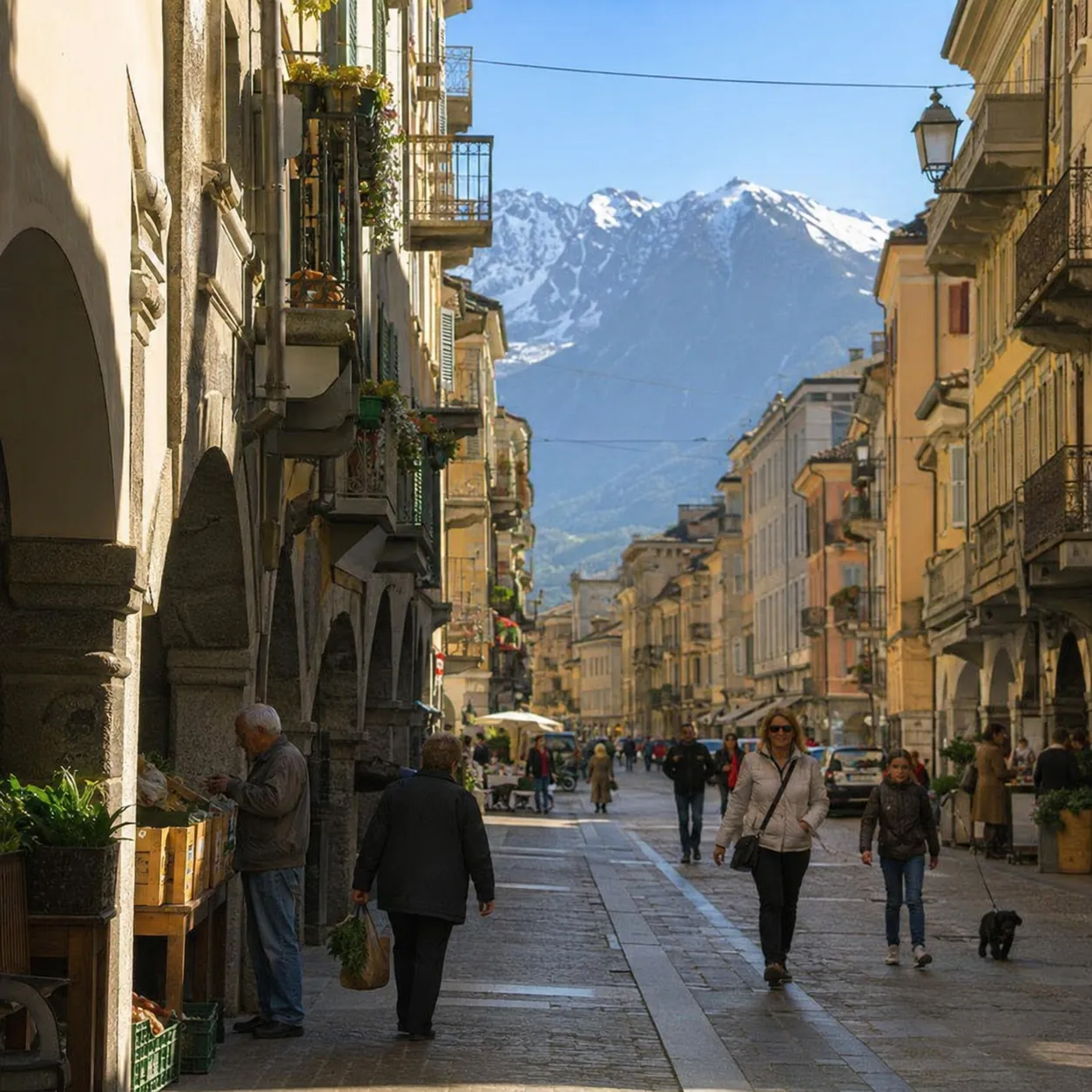
01 / Valle d’Aosta
Introduction
Italy’s smallest region sits in the far north-west, bordered by France and Switzerland and surrounded by some of Europe’s highest mountains.
Valle d’Aosta may be compact, but it has a remarkably strong identity. Italian and French are both official languages, and centuries of Alpine, Roman and European influence have created a culture unlike anywhere else in the country.
The regional capital, Aosta, is sometimes called the “Rome of the Alps” because of its important Roman remains. Beyond the city, the valleys are dotted with medieval castles, traditional stone-and-timber villages, mountain refuges and historic communities shaped by the landscape.
The scenery is extraordinary. Mont Blanc, the Matterhorn, Monte Rosa and Gran Paradiso all rise around the region, making Valle d’Aosta a destination for walking, climbing and mountain life as well as winter sports.
Living here offers a very different vision of Italy: quieter, smaller and closely connected to nature, yet positioned between Italy, France and Switzerland. Its towns and villages range from internationally known destinations such as Courmayeur and Cervinia to peaceful communities that retain a deeply local character.
Valle d’Aosta brings together ancient history, castles and spectacular Alpine landscapes.
02 / Valle d’Aosta
Food & lifestyle
Valle d’Aosta is Italy’s smallest region, but its landscape and cultural identity are unmistakable.
Surrounded by some of Europe’s highest mountains, including Mont Blanc, the Matterhorn, Monte Rosa and Gran Paradiso, it has been shaped by Alpine farming, demanding winters and its position between Italy, France and Switzerland.
Both Italian and French are official languages, and that meeting of cultures can also be tasted in the food.
Fontina is the region’s most famous product. Made in the mountains, it melts beautifully and is used in fonduta, polenta concia and many warming local dishes.
Fonduta Valdostana is a smooth preparation of Fontina, traditionally enriched with egg yolks and served with bread. Polenta concia combines polenta with generous quantities of butter and melted cheese—exactly the sort of sustaining food that makes sense after a day in the mountains.
Carbonade is a slow-cooked beef dish often prepared with wine, while the region also produces distinctive cured meats such as mocetta and Lard d’Arnad. Rye bread, chestnuts, soups and hearty stews reflect a time when mountain communities had to make careful use of ingredients that could survive the winter.
Despite the altitude, Valle d’Aosta also produces wine. Its steep, terraced vineyards are sometimes described as heroic because cultivating them requires so much manual work.
Everyday life here is strongly influenced by the seasons. Winter brings skiing and snow-covered villages, while summer opens mountain paths, meadows and opportunities for walking and cycling.
Aosta provides Roman history, shops and services, while smaller villages offer close communities and a quieter pace. Castles appear throughout the valley, and different languages and traditions coexist within a remarkably compact region.
It will not suit everyone: mountain weather, snow and driving conditions require consideration. But for those who love nature, outdoor life and a strong sense of place, Valle d’Aosta can be extraordinary.
03 / Valle d’Aosta
Places & experiences
Valle d’Aosta may be Italy’s smallest region, but its scenery, history and cultural identity are anything but small.
Surrounded by some of Europe’s highest mountains, this bilingual Italian and French-speaking region offers Alpine villages, medieval castles, Roman history and remarkable opportunities to enjoy nature throughout the year.
The regional capital, Aosta, is compact and easily explored on foot. Roman monuments appear between its streets and squares, while the surrounding mountains remain visible from much of the town. It is a fascinating combination of an ancient settlement and an Alpine regional centre.
Courmayeur sits beneath the magnificent Monte Bianco massif. In winter it is associated with skiing and snowy landscapes, while the warmer months bring walking, climbing and mountain excursions. Even for visitors who do not ski, simply seeing this vast mountain scenery can be an unforgettable experience.
Gran Paradiso National Park offers another side of the region. Mountain trails pass through valleys, forests and high pastures where it is possible to encounter Alpine wildlife. The experience changes significantly with the seasons, from summer walking and wildflowers to snowy winter scenery.
Valle d’Aosta is also famous for its castles. Fénis Castle, with its towers, courtyards and fortified walls, is one of the region’s most recognisable. It provides a reminder that these Alpine valleys were historically important routes between Italy and the rest of Europe.
Distances may appear short on a map, but mountains, elevation and weather can make each valley feel quite distinct. It is a region best understood by experiencing more than one location and more than one season.
04 / Valle d’Aosta
Everyday life
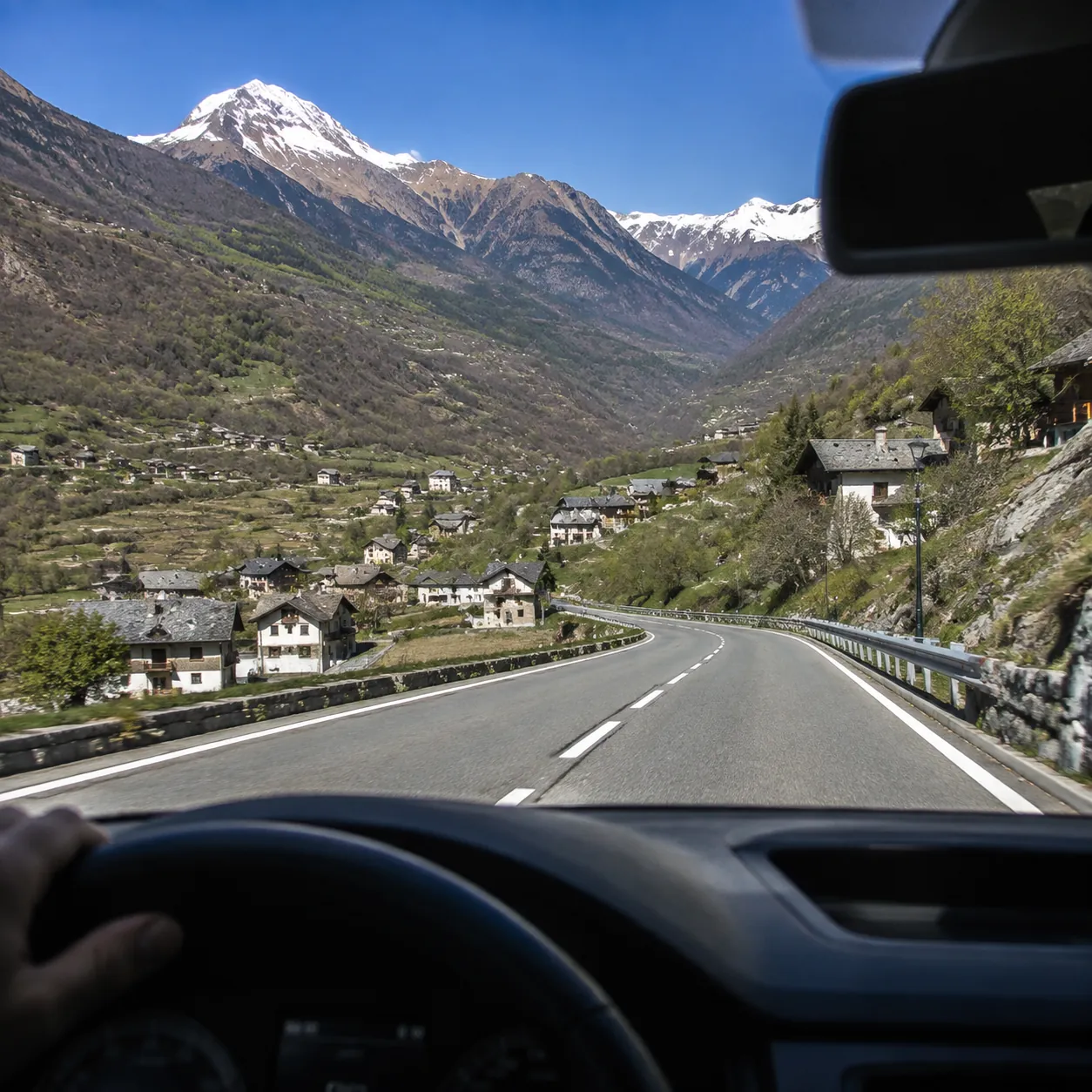
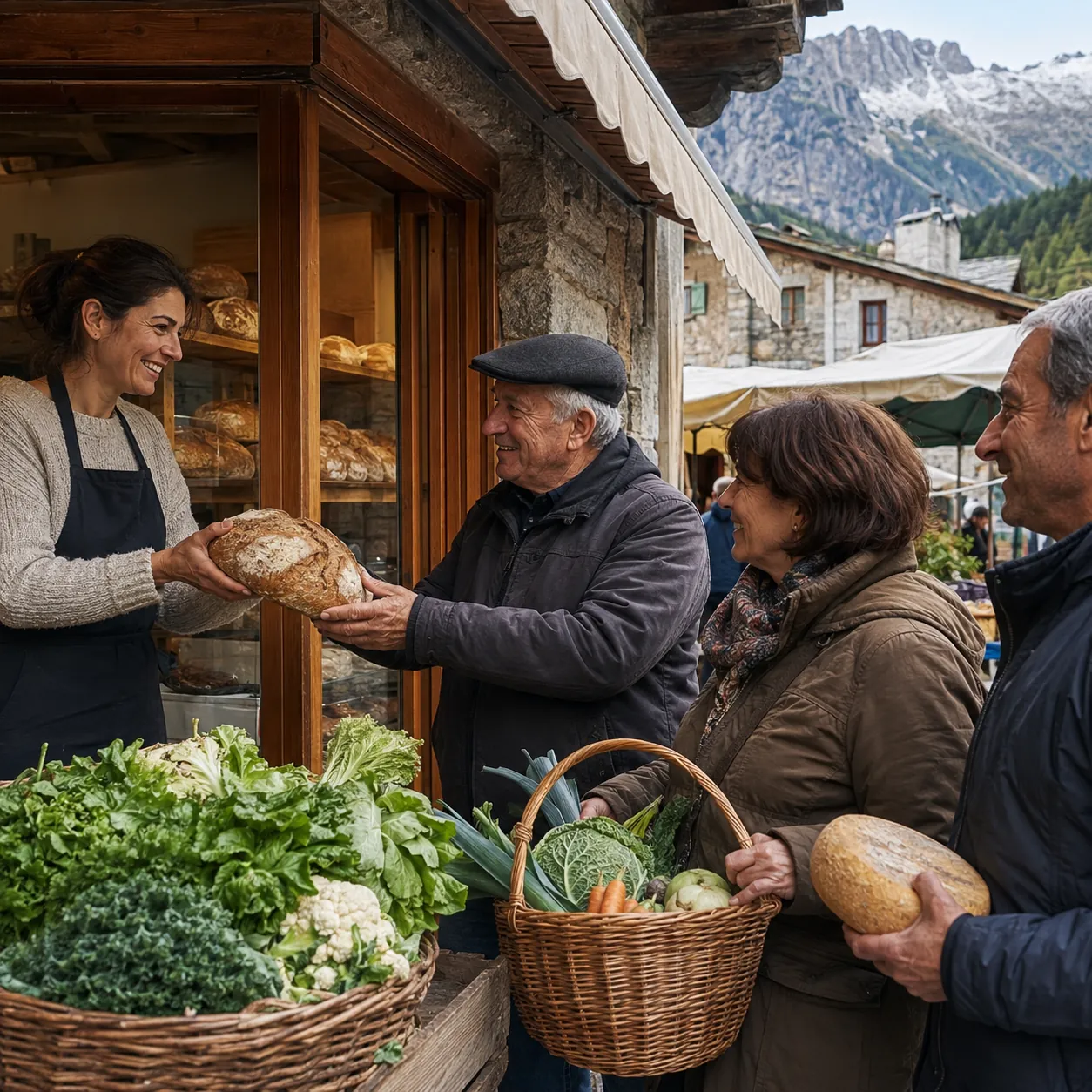
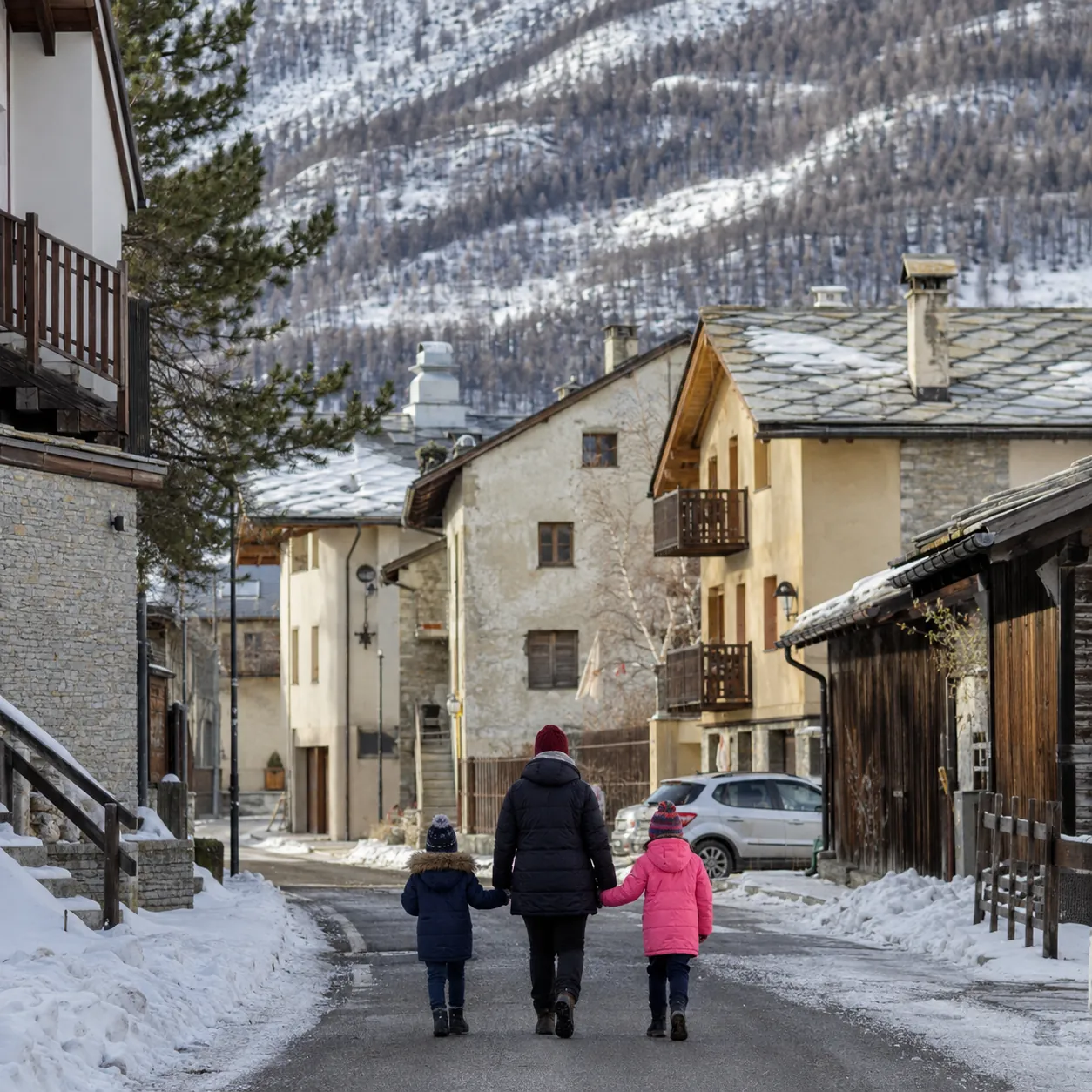
Illustrative scenes of regional life, created with AI.
Valle d’Aosta is Italy’s smallest region, surrounded by some of Europe’s highest mountains. Its scenery is extraordinary, but permanent life here requires a realistic understanding of climate, transport, services and seasonal change.
Aosta is the principal town and the most practical base for year-round living. It provides shops, schools, healthcare, public offices, restaurants and cultural life within a compact centre. It feels like a genuine working town rather than simply a holiday destination, with the mountains visible from ordinary streets and daily routines.
The main valley contains most of the population, services and transport connections. Towns and villages along it can offer access to local shops and roads, although a car is usually valuable and becomes increasingly important away from Aosta.
Higher villages and side valleys provide tranquillity, clean air and impressive scenery, but everyday tasks require more planning. The nearest supermarket, pharmacy, doctor or school may involve a considerable journey. Roads can be steep and winter conditions require confidence, suitable tyres and regular maintenance.
Winter is not merely a picturesque season. Snow must be cleared, heating becomes a significant expense and properties need to be properly insulated. Homes left empty for long periods require careful management to prevent frozen pipes, damp and other cold-weather problems.
Tourism affects the rhythm of many communities. Well-known resorts can be extremely active during the ski season and much quieter between seasons. Jobs, opening hours and local businesses may follow this pattern. A place that feels lively during a holiday week could feel very different in November or late spring.
Valle d’Aosta has both Italian and French as official languages, and its bilingual identity is visible in schools, public administration and place names. Daily conversation is generally manageable in Italian, while local traditions and dialects remain important.
Community life can be close-knit. This may provide security and a strong sense of belonging, but newcomers should not expect instant integration. Participation, reliability and learning how the community functions matter.
The region can appeal to people who enjoy outdoor life, defined seasons, smaller communities and a certain degree of self-sufficiency. It is less suitable for someone requiring extensive entertainment, a broad employment market or quick access to international airports.
A beautiful mountain home can be deeply rewarding—but the decisive questions concern winter access, heating, services and whether the location works throughout the year.
05 / Valle d’Aosta
Property market
Italy’s smallest region contains a surprisingly complex property market.
Aosta city and prestigious mountain resorts operate at different levels. Comparing a resort chalet with a year-round apartment using one regional average can be misleading.
Aosta offers the most practical environment for year-round living, with shops, services, schools and transport. Resort locations may appeal to holiday-home buyers and investors, but demand can be highly dependent on the precise village, proximity to ski facilities and the quality of the property.
Mountain homes require a particular type of due diligence. Buyers should examine insulation, heating costs, roof condition, snow management, winter road access, parking and condominium charges. In a chalet or older stone property, maintenance responsibilities and access to utilities also need careful investigation.
Restrictions affecting second homes or holiday rentals may differ between municipalities, so assumptions should never be made based on another Alpine location.
The most beautiful chalet is not necessarily the most practical home—particularly if you intend to use it throughout the year.
This guide offers general regional context. Local services, conditions and property rules should be checked for your chosen location and plans. Property decisions need individual technical, legal and financial advice.