01 / Veneto
Introduction
Veneto is one of Italy’s most varied regions—a place where extraordinary cities, rolling vineyards, mountains, lakes and the Adriatic coast all form part of the same landscape.
Venice is its world-famous capital, built across the lagoon and shaped by centuries of trade, art and maritime history. Beyond Venice, however, Veneto has many other distinctive cities. Verona is known for its Roman arena, elegant piazzas and romantic associations, while Padua brings ancient university traditions, lively arcades and important works of art. Vicenza is celebrated for Palladian architecture, and Treviso offers canals and a relaxed historic centre.
The countryside is equally diverse. The Prosecco Hills of Conegliano and Valdobbiadene are covered with vineyards and small villages, while the eastern shore of Lake Garda offers waterside towns and a gentler climate. To the north, Cortina d’Ampezzo and the Veneto Dolomites provide spectacular mountain scenery and a completely different rhythm of life.
Along the Adriatic, Veneto also has long beaches, fishing communities and lagoon landscapes. This variety means that life in the region can feel cosmopolitan, historic, rural, alpine or coastal depending on where you choose.
For someone imagining a home in Italy, Veneto offers much more than a visit to Venice: vibrant cities, peaceful wine country, lakeside living, mountain retreats and well-connected towns.
02 / Veneto
Food & lifestyle
Veneto may be known internationally for Venice, but the region extends far beyond the lagoon.
Its landscapes include the Dolomites, Lake Garda, the Prosecco hills, historic cities such as Verona, Padua and Vicenza, productive countryside and a long Adriatic coastline. That variety is reflected in its food and daily life.
In Venice, a traditional pleasure is visiting a bacaro for cicchetti—small snacks enjoyed with a glass of wine. Typical choices include baccalà mantecato, a creamy preparation of salt cod, and sarde in saor, sardines with onions, vinegar, raisins and pine nuts.
Rice, polenta and pasta also play important roles. Risi e bisi combines rice and peas, while bigoli is a substantial local pasta traditionally served with rich sauces. Radicchio di Treviso is another regional speciality, and tiramisù is widely associated with Treviso and the Veneto tradition.
The region’s wines are equally varied: Prosecco comes from its celebrated hills, while Amarone and Soave represent very different areas and winemaking styles.
The Veneto lifestyle changes dramatically depending on location. Venice offers an extraordinary car-free existence shaped by canals and boats. Verona and Padua provide lively urban life, while the countryside, Lake Garda and mountain communities each have their own rhythm.
This is why choosing a home in Veneto involves more than selecting a beautiful property. Transport, tourism, seasonal activity and the differences between city, lake, countryside and coast can completely change the experience.
03 / Veneto
Places & experiences
Veneto is internationally associated with Venice, but exploring the wider region reveals Roman cities, historic university towns, vineyard landscapes, mountains, lakes and a strong local identity.
Venice is unlike any other city. Its canals are not simply decorative—they form part of the city’s transport system and everyday geography. Beyond St Mark’s Square and the Rialto Bridge, quieter neighbourhoods reveal small squares, local shops, churches and residential streets where life continues away from the busiest visitor routes. Travelling by vaporetto offers a different perspective of its palaces and lagoon.
Verona combines Roman history with an elegant and very walkable historic centre. The Arena still dominates Piazza Bra, while attractive streets and squares lead towards the River Adige. Although its connection with Romeo and Juliet attracts many visitors, the city’s architectural and cultural appeal reaches far beyond that famous story.
The hills between Conegliano and Valdobbiadene offer another Veneto entirely. Vineyards cover the steep slopes around small villages, church towers and winding country roads. It is a landscape to explore slowly, stopping at viewpoints and discovering the rural character behind one of Italy’s best-known wines.
Padua is one of the region’s most important historic cities. It has a long university tradition, lively markets and remarkable artistic and religious heritage. Prato della Valle, with its canal, bridges and statues, is one of Europe’s largest and most distinctive squares.
Veneto demonstrates why experiencing only a region’s most famous destination can provide an incomplete picture. Venice, Verona, the Prosecco Hills and Padua all belong to Veneto, yet each offers a completely different sense of place.
04 / Veneto
Everyday life
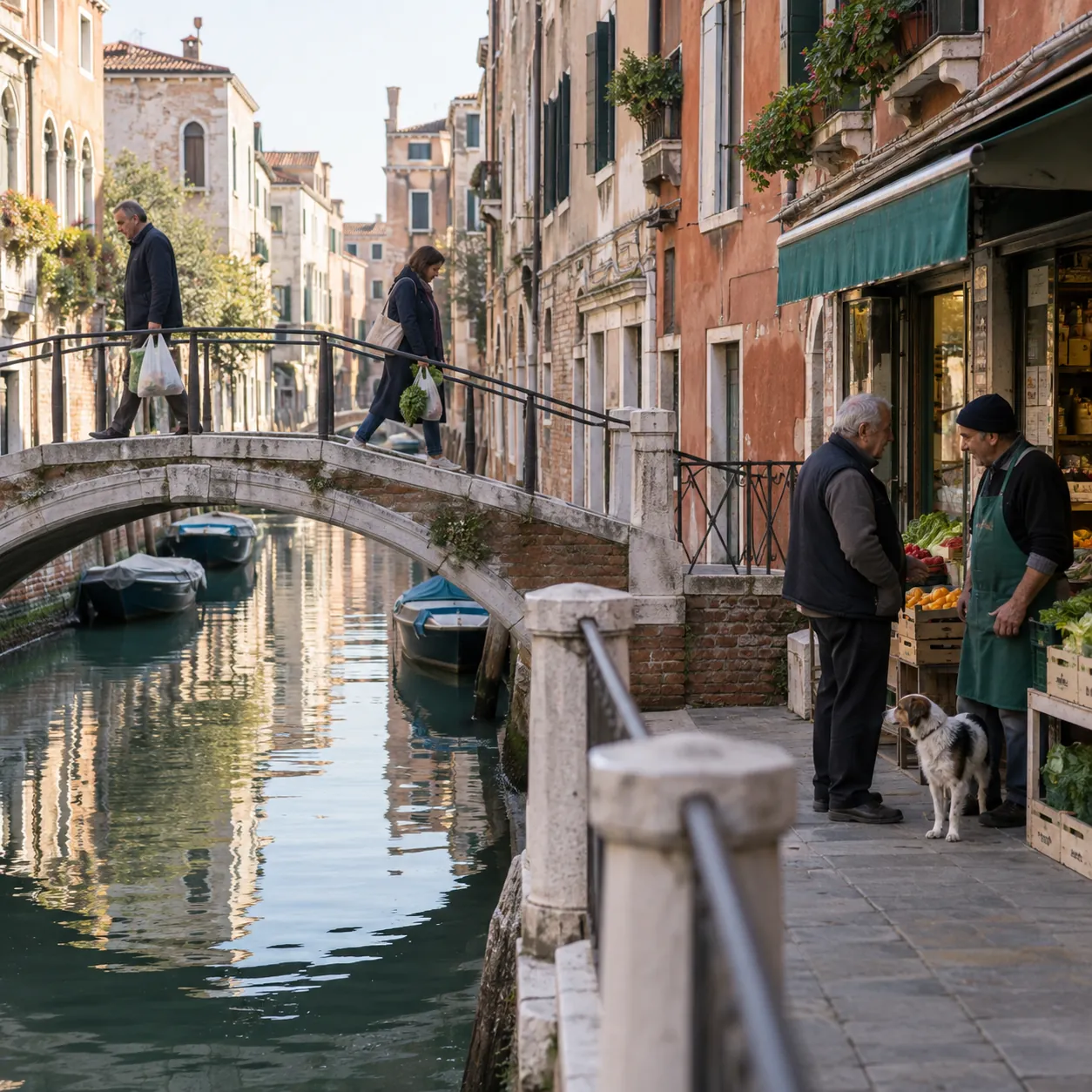
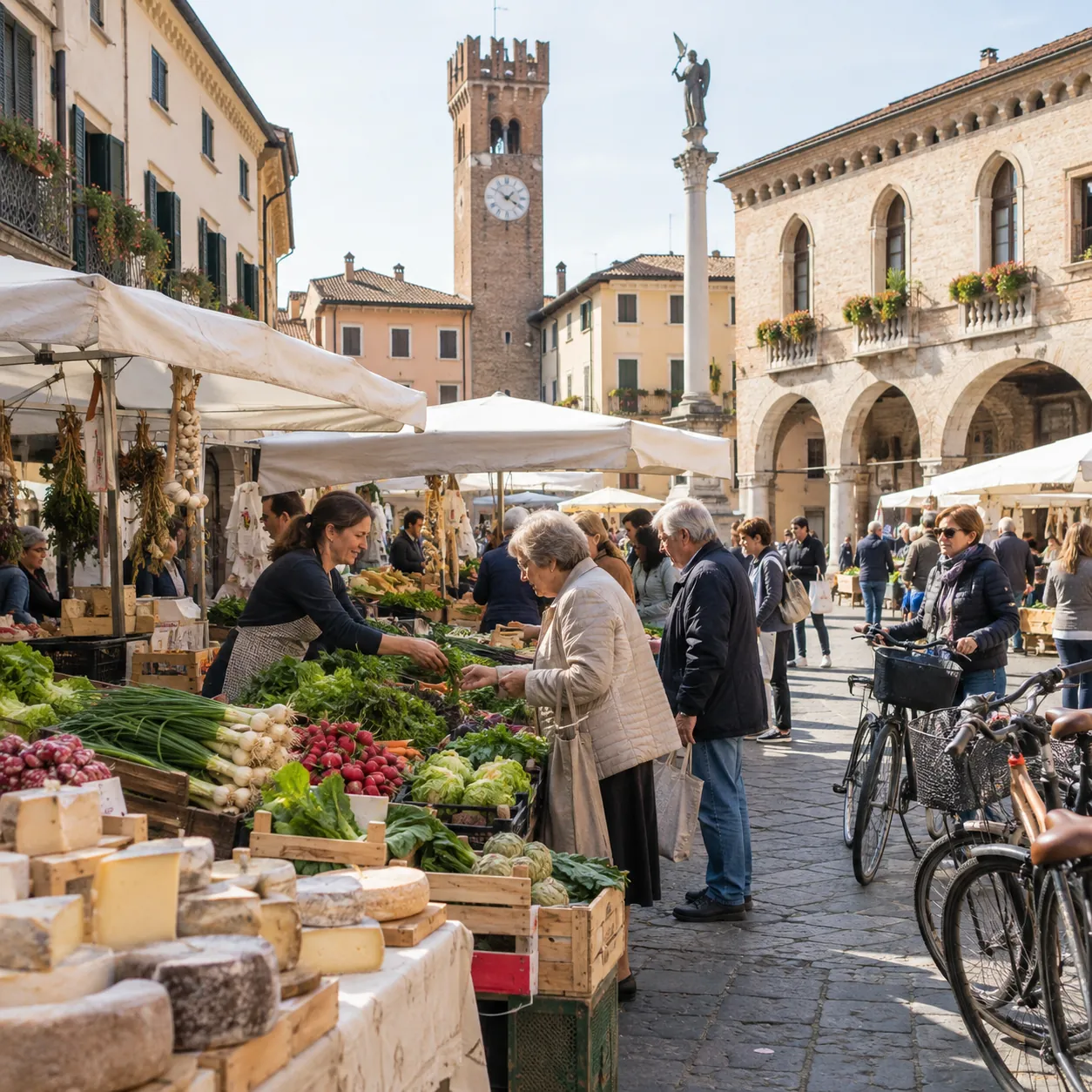
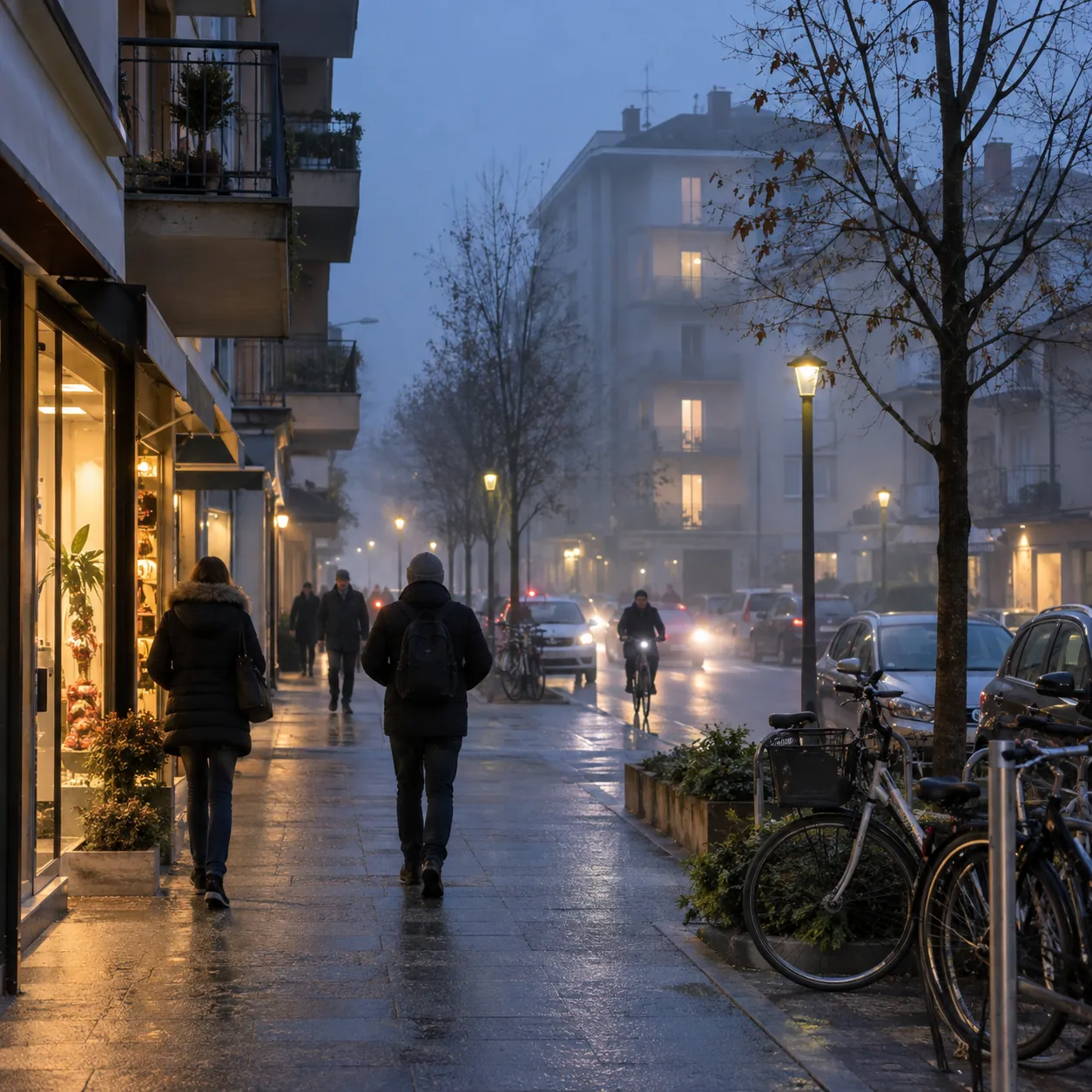
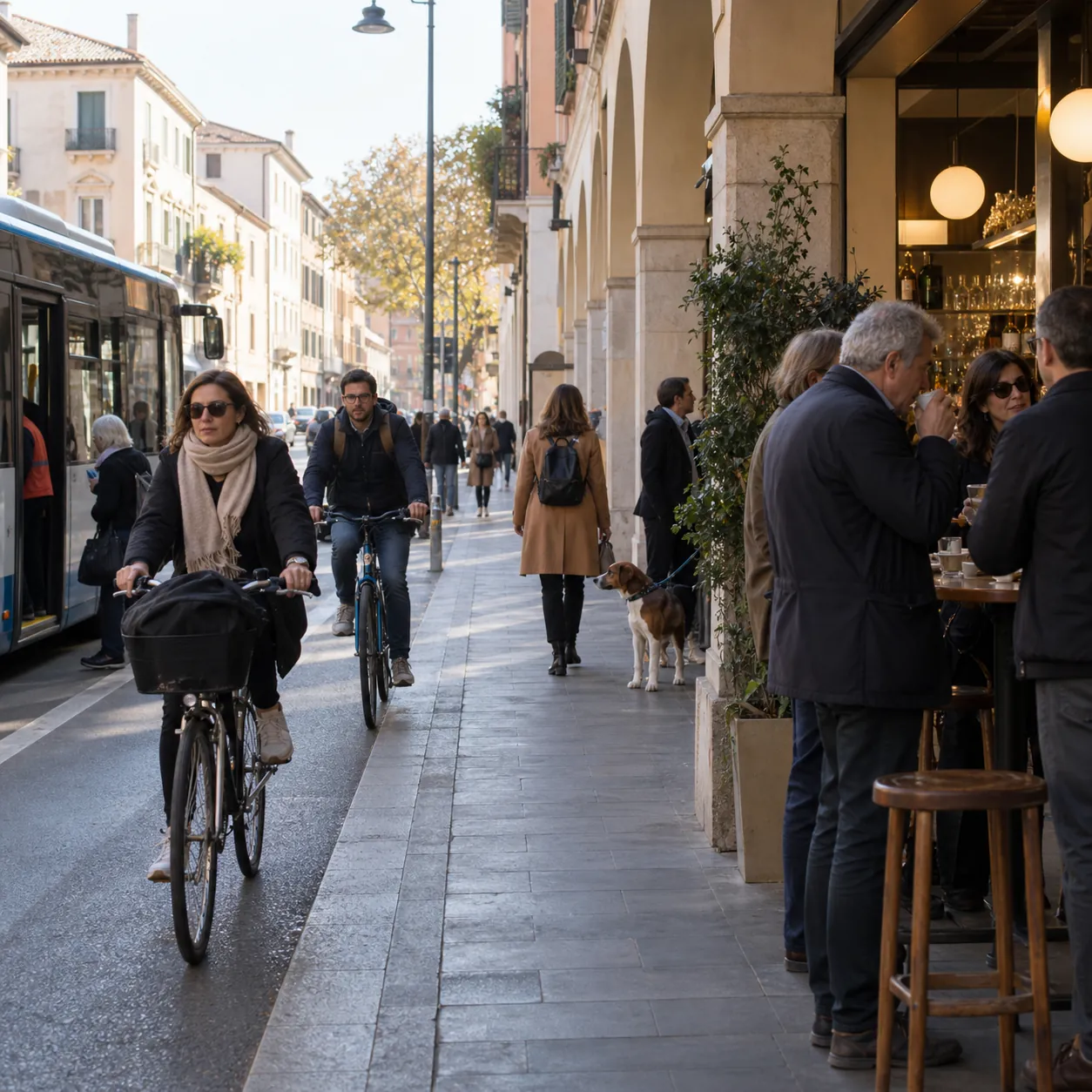
Illustrative scenes of regional life, created with AI.
Veneto is known throughout the world for Venice, but everyday life across the region is remarkably varied.
Venice itself offers an experience unlike anywhere else. Residents walk, cross bridges and travel by boat as part of an ordinary day. Even shopping, receiving deliveries or attending an appointment involves different practical considerations. Living there can be magical, but crowds, acqua alta, property maintenance and the logistics of a city without roads must be understood—not merely admired during a holiday.
Mainland Veneto feels very different. Verona, Padua, Vicenza, Treviso and the communities surrounding them are active, practical places where people work, study, raise families and commute. Trains connect many of the principal cities, while bicycles are part of daily life in several urban centres. In more dispersed towns and rural areas, a car is often essential.
Veneto has a strong economy and many areas feel industrious and energetic. Historic centres remain social focal points, with markets, cafés and the evening aperitivo bringing people together. Outside the cities, life may be centred around family, local associations and long-established communities.
The climate is another important consideration. Summers on the plains can be hot and humid, while winters may feel damp, cold and foggy. Life in the Dolomites, around Lake Garda or along the coast naturally follows a very different rhythm. Beach resorts can be lively in summer and much quieter during winter.
Veneto can suit someone who wants history and beauty without giving up access to employment, transport and services. But choosing between Venice, a well-connected city, an industrial town, the countryside, the mountains or the coast means choosing very different versions of everyday life.
Discover independent guidance for buying property in Italy at mgvendone.com
05 / Veneto
Property market
Veneto offers extraordinary variety: Venice, Verona and Padua; Lake Garda; productive smaller cities; vineyard hills; Adriatic resorts and the Dolomites.
Buying in Venice requires specialised practical thinking: access, water exposure, building maintenance, deliveries and the rules surrounding renovations and rentals.
Verona offers a year-round city environment. Padua and Treviso appeal to buyers seeking services and transport, while rural locations and parts of Rovigo or Belluno can be more accessible.
Cortina d’Ampezzo is a premium resort market. Other mountain communities can be considerably less expensive, even within the same province.
For historic and rural properties, investigate planning, cadastral compliance, structure, drainage and renovation restrictions. For mountain homes, check access, heating and snow management. For apartments, understand the condominium before committing.
This guide offers general regional context. Local services, conditions and property rules should be checked for your chosen location and plans. Property decisions need individual technical, legal and financial advice.